
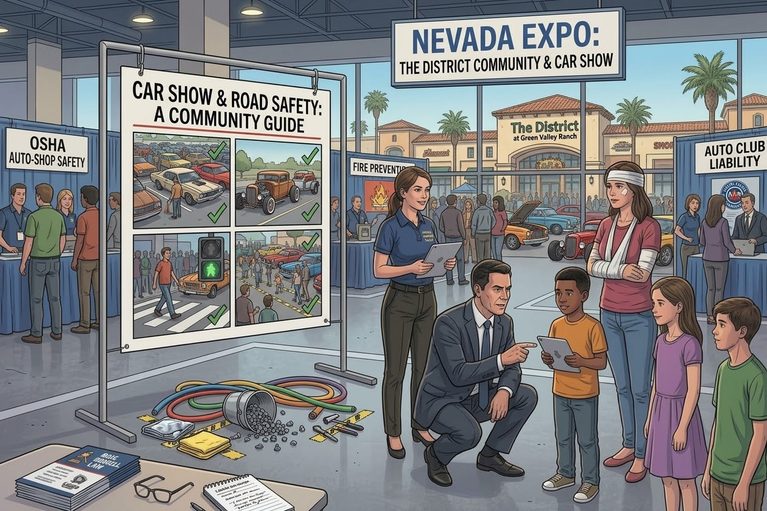
An evening spent looking at classic cars should not end with a trip to the emergency room. But when hundreds of people gather along Main Street at The District at Green Valley Ranch, the same walkways that feel spacious on an ordinary afternoon can become crowded with spectators, families, food customers, and people moving between parked vehicles and shops. Hosted by Me Gusta Tacos in partnership with Las Vegas Breast Cancer Warriors, Cruisin’ The District brings classic cars, live music, and food specials to The District at Green Valley Ranch. The event also gives visitors a reason to pay attention to their footing. Spilled drinks, uneven pavement, poorly secured cords, and dimly lit areas can turn a routine walk into a Cruisin’ at The District slip and fall. A person who suffers an injury at the event might have grounds for a claim against a property owner, business, maintenance contractor, or another responsible party.
The key is figuring out what caused the fall, who was responsible for the area, and whether that party failed to address a hazard it knew about or should have discovered. Read on for this helpful guide from the Las Vegas slip and fall lawyers at The Paul Powell Law Firm.
Cruisin’ at The District Slip and Fall: Common Causes
The District’s pedestrian-friendly layout encourages visitors to walk between shops, restaurants, and outdoor gathering areas like Green Valley Ranch Resort Spa and Casino and The Green at The District. During a car show, people may stop suddenly to photograph a vehicle, move around a crowd to see a display, or carry food and drinks while looking for somewhere to sit.
Those ordinary activities can complicate an already busy walkway.
Some of the trouble spots are easy to picture: a wet patch outside a restaurant, a cable stretched across the path between displays, or a broken section of pavement near the parking garage. After sunset, a poorly lit walkway can make these problems harder to spot. Crowds can also push visitors toward the edge of a path or around barriers they wouldn’t normally encounter.
The District accidents alone don’t mean the property owner is legally responsible. The important questions when it comes to Nevada premises liability laws are what caused the fall, who was in charge of that area, and whether the hazard should have been dealt with before someone got hurt.
What to Do after a Fall at Cruisin’ The District
You might be tempted to brush yourself off and get back to the car show, especially if the fall happened in front of a crowd. Before leaving, consider whether you’re hurt and whether you can safely document what happened.
Make a note of the details while they’re fresh. Try to jot down what happened before the details get fuzzy. Include where you were walking, what caused your fall, how the area was lit, and whether you saw any warning signs or employees nearby. Even something you barely thought about at the time could help explain the accident later.
Take photos if you can. Get a clear picture of whatever caused the fall, along with a few shots showing the surrounding walkway and nearby businesses. If someone has already cleaned up the spill or moved the obstacle, note that and see whether anyone nearby took pictures before it was removed.
Ask witnesses for their contact information. Other visitors may have seen the fall itself, noticed the hazard earlier, or watched an employee walk past it. Their accounts could help establish what happened before you arrived.
Get medical care. Don’t put off an evaluation just because you managed to stand up and walk away. Some injuries become more noticeable later. Keep copies of medical records and bills, and follow your provider’s advice about treatment and recovery.
Keep relevant records. Save receipts for medical care, transportation, medication, and other accident-related expenses. Write down what you remember about the fall while the details are fresh. Avoid guessing about facts you did not observe.
You do not need to confront a property manager or determine fault at the scene. Focus on getting medical care and preserving the information available to you.
When to Contact a Henderson Slip and Fall Attorney
A fall during Cruisin’ The District might seem straightforward at first, particularly if the hazard is visible in a photograph. The harder questions often concern who controlled the area, when the hazard appeared, whether inspections were reasonable, and whether the Henderson retail parking lot injury will require ongoing treatment.
These issues can become more difficult when a property manager, business, contractor, and event organizer each have different responsibilities. A visitor may also have no direct access to the maintenance logs or security footage needed to establish how the accident occurred.
A Henderson slip and fall attorney can investigate the circumstances, identify potentially responsible parties, request relevant evidence, and assess how Nevada law applies to the facts. Legal guidance can be particularly useful when injuries are substantial, fault is disputed, or an insurer questions whether the property owner had notice of the hazard.
Nevada generally imposes a two-year deadline for personal injury actions under NRS 11.190(4)(e), although the deadline and any exceptions should be evaluated based on the specific claim. Waiting until the deadline approaches can make evidence harder to secure, so it is sensible to address a serious injury sooner rather than later.
If you were hurt while attending Cruisin’ The District or visiting nearby shops and restaurants, a careful look at the location, the cause of the fall, and the available evidence can help determine whether a Green Valley Ranch premises liability claim is supported.
Cruisin’ at The District Slip and Fall Claim FAQs
Can I file a claim if I slipped on a drink spilled by another visitor?
Possibly. If someone other than the property owner or its employees created the spill, the evidence may need to show that the responsible business or property operator had actual or constructive notice and failed to take reasonable action. The circumstances of the spill and the property’s inspection practices will matter.
What if the dangerous condition was cleaned up before I photographed it?
You can still preserve other evidence. Report the accident promptly, record the location and time, identify witnesses, and ask that relevant surveillance footage be preserved. An incident report or witness account may help establish what was on the ground before it was cleaned.
Can I bring a claim if I was partly responsible for the fall?
Potentially. Nevada’s comparative negligence statute may permit recovery when the injured person’s negligence is not greater than the negligence of the parties being sued. Any award is reduced according to the injured person’s share of fault, and the specific facts determine how the rule applies.
What if my symptoms did not appear until the day after the car show?
Delayed symptoms do not automatically prevent a claim. Seek medical care, explain when and how the fall occurred, and follow the recommended treatment plan. Medical records can help document the nature and progression of the injury.
How long do I have to bring a Nevada slip and fall claim?
Nevada generally has a two-year statute of limitations for personal injury claims, subject to applicable exceptions and the circumstances of the case. Do not assume that the deadline is the same for every potential defendant or type of claim. Getting advice early can help protect evidence and clarify the relevant filing deadline.
Contact a Henderson Slip and Fall Attorney Today
If you were injured at Cruisin’ The District or another location in Henderson, the circumstances surrounding your fall deserve a closer look. ThePaul Powell Law Firm can help you understand whether a property owner or another responsible party may be liable for your injuries.
Call, fill out a contact form, or use LiveChat to contact the Las Vegas injury lawyers at The Paul Powell Law Firm today to discuss your slip and fall, learn more about your rights, and determine what steps may be appropriate. Great Results. Lightning Fast.™
The information on this blog is for general information purposes only. Nothing herein should be taken as legal advice for any individual case or situation. This information is not intended to create, and receipt or viewing does not constitute, an attorney-client relationship.