
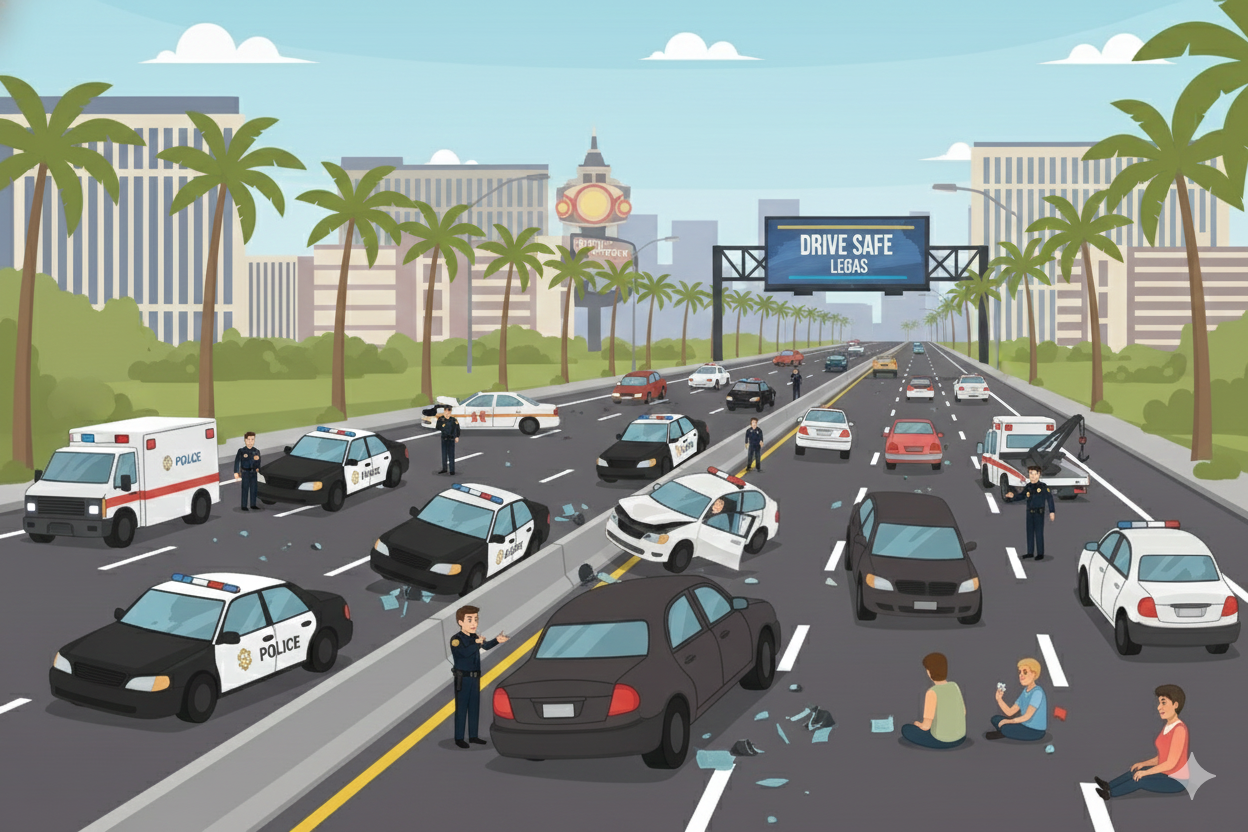
Holiday Season Conditions in Las Vegas (What Happened)
During past holiday seasons in Las Vegas, the city experienced a familiar surge in visitors, packed casinos, and crowded roadways. Residents and tourists traveled in greater numbers to attend celebrations, shows, and late-night gatherings. With this increase in activity came heavier traffic volume and a noticeable rise in risky driving behavior, particularly during evening and overnight hours.
As more vehicles filled highways and surface streets, traffic accidents and collisions became more frequent. Nationwide data from the National Highway Traffic Safety Administration showed that December historically produced 10–12% more fatal crashes than the average month. Many of those crashes occurred at night, when impaired driving was most prevalent. Las Vegas reflected these national trends, especially during weekends and major holiday dates.
Common Causes Observed in Holiday Traffic Accidents
Impaired Driving (DUI)
Throughout past holiday periods, drunk and drug-impaired driving increased significantly. Social gatherings, parties, and celebrations led many drivers to get behind the wheel while impaired. Despite Nevada’s strict DUI laws and enforcement efforts, impaired drivers continued to account for a substantial portion of serious holiday crashes, particularly during late-night and early-morning hours.
Heavy Congestion and Driver Frustration
As travelers from across the country converged on Las Vegas, major corridors such as I-15 and roads surrounding the Strip became heavily congested. This congestion often escalated into aggressive driving behaviors, unsafe lane changes, and failure-to-yield collisions.
Driver Fatigue
Many drivers involved in holiday crashes were fatigued from long-distance travel or late-night celebrations. Reduced alertness and slower reaction times contributed to preventable traffic accidents.
Inexperience and Distraction
Out-of-state visitors unfamiliar with local interchanges and traffic patterns struggled to navigate busy roads. When combined with mobile phone use, GPS adjustments, and other distractions, the likelihood of collisions increased.
Why DUI Crashes Spiked Each December in Nevada
Seasonal Celebrations
December consistently presented elevated risk due to frequent alcohol-centered events, including office parties, family gatherings, and New Year’s Eve celebrations. These conditions repeatedly led to higher rates of impaired driving crashes.
Increased Enforcement Efforts
Law enforcement agencies increased patrols and sobriety checkpoints under Nevada’s “Zero Fatalities” initiatives. While these efforts resulted in more arrests, they did not prevent all crashes. Victims still suffered serious injuries, financial losses, and long-term consequences.
Criminal Fault vs. Civil Recovery
Although DUI crashes often involved clear criminal liability, injured victims still faced the challenge of pursuing full civil compensation. Recovering damages for pain and suffering, lost income, and long-term medical care required experienced legal representation beyond the criminal process.
What Victims Did After Holiday Traffic Accidents
Immediate Safety Measures
After collisions occurred, injured individuals prioritized safety by checking for injuries, moving to safe locations when possible, and calling 911. Emergency responders documented the scenes and provided medical care.
Evidence Preservation
Victims and their families gathered critical evidence, including:
- Driver contact and insurance information
- Photographs and videos of vehicle damage, road conditions, and injuries
- Witness names and statements
This documentation later proved essential for insurance claims and legal action.
Medical Evaluation
Many injured parties sought medical attention promptly, even when injuries initially seemed minor. Delayed symptoms were common, and medical records became vital evidence in injury claims.
Insurance Reporting and Caution
Traffic Accidents were reported to insurers, but victims who proceeded carefully avoided giving recorded statements that could later be used to minimize claim values. Key documents preserved included police reports, medical records, treatment plans, and insurer communications.
Insurance Challenges and the Role of Legal Counsel
Types of Damages Pursued
Victims of holiday crashes sought compensation for:
- Economic damages such as medical expenses, lost wages, and vehicle repairs
- Non-economic damages, including pain, suffering, and emotional distress
- Punitive damages, in cases involving gross negligence, like extreme intoxication
Insurance Company Tactics Encountered
During the busy holiday season, insurers frequently delayed investigations, questioned liability, or pressured victims into quick settlements. These tactics often undervalued legitimate claims.
Why Early Legal Action Mattered
Victims who contacted legal counsel early strengthened their cases by preserving surveillance footage, securing witness testimony, and preventing evidence loss. Early involvement also improved leverage during settlement negotiations.
Lessons from Past Holiday Traffic Accidents
Past holiday seasons in Las Vegas showed that traffic accidents remained a serious and recurring risk for drivers, passengers, pedestrians, and families. Understanding what occurred after these traffic accidents — and how victims protected their rights — demonstrated the importance of preparation, documentation, and timely legal guidance.
Those who sought help from Paul Powell Law Firm benefited from thorough investigations, preserved evidence, and strong advocacy against insurance companies. Learning from the aftermath of past holiday traffic accidents helps future victims protect themselves and pursue the compensation they deserve.
Frequently Asked Questions (Past-Focused)
What actions proved most important immediately after a holiday crash?
Victims who prioritized safety, contacted law enforcement, documented the scene, and sought medical care were best positioned to protect their legal rights.
How did DUI arrests affect civil injury claims?
DUI arrests and convictions strengthened civil cases by formally documenting impairment, making liability easier to prove while still requiring legal advocacy for full compensation.
Were punitive damages available in Nevada?
Yes. In cases involving gross negligence, such as severe intoxication or reckless driving, courts allowed punitive damages to punish wrongdoing and deter similar behavior.