
Long-Term Effects of Common Car Accident Injuries

Long-Term Effects of Common Car Accident Injuries

Car accidents can cause a range of injuries, from whiplash to broken bones to brain trauma. In some cases, the symptoms may not even be noticeable until days or months after the accident. Physical injuries are not the only consequence felt by the victim, but severe emotional effects and ongoing financial problems can also have a long-term impact.

Discussed below are some of the long-term physical, emotional and financial effects experienced by victims who have been involved in an auto accident.

Types of Car Accident Injuries

Car accidents injuies often cause immediate and visible physical damage, but many victims also experience long-term health problems that can take weeks, months, or even years to fully surface. From cuts and fractures to severe spinal damage or traumatic brain injuries, the physical aftermath of a collision can be painful, debilitating, and life changing.

  • Cuts

Car accident injuries can be anything like minor and major cuts from contact with sharp metal, broken glass and flying debris. Cuts can lead to skin infections or leave permanent scars. 

  • Burns

Burns occur in crashes in which the impact ruptures a fuel line or gas tank and will trigger an explosion. Victims may also suffer thermal burns from contact with hot parts of the vehicle or friction burns from being dragged for a distance. Burns can lead to permanent scarring as well as related problems such as contractures, or the tightening of skin, muscles and tendons due to scar tissue.

  • Soft Tissue Damage

Muscles, tendons and ligaments can undergo enduring damage due to the sudden, awkward body movements that a person experiences in a collision. The most common injury is the straining of the soft tissue in the neck better known as whiplash. This condition can lead to long-term chronic pain and discomfort. 

  • Fractures

A person’s body gets thrown around in a crash and the sudden movement can easily lead to wrist, arm, leg, ankle, collarbone and rib fractures. A more serious fracture may take an extended period of time to heal and could result in a life-long disability.

  • Back and Spine Car Accident Injuries 

The back and spinal cord are highly susceptible to damage in a crash. The accident may aggravate a pre-existing back condition or the victim may suffer from partial, total paralysis or the loss of feeling and use of one’s limbs.  

  • Traumatic Brain Injuries (TBI) 

Many victims encounter concussions without realizing it due to the shock and adrenaline. In cases of severe TBI, victims may fall into a coma and/or die from damage to the brain. 

  • Internal Organ Damage 

The impact in a crash may cause an object to puncture an organ or cause a compression of the organs. If internal bleeding occurs, it may be a sign of a serious life-threatening problem. 

Emotional Effects of Car Accident Injuries

The trauma of a car accident doesn’t always end when the physical wounds heal. Many victims suffer lasting emotional effects, including anxiety, depression, and post-traumatic stress disorder (PTSD), which can disrupt daily life, relationships, and overall mental health for months or even years after the crash.

  • Anxiety and Depression 

Even minor collisions can cause victims of an accident long-term anxiety and fears about driving, riding in a car or passing the site of an accident. Feelings of sadness or depression after a car accident are very common, and often go hand-in-hand with the symptoms of anxiety. 

  • Sleep Disorders 

Stress from a traumatic event like a car accident can cause a wide range of sleep disorders. The stress causes the release of neurochemicals such as epinephrine and adrenaline and those neurochemicals can disturb the victim’s sleep by keeping them awake or causing nightmares and flashbacks. 

  • Post-Traumatic Stress Disorder (PTSD) 

Driving or being a passenger involved in a severe accident, or witnessing a disturbing injury or death may increase the risk of developing PTSD. A person with PTSD may be unable to work or maintain healthy relationships with friends or family.  

Financial Effects of Car Accident Injuries

Beyond the physical and emotional toll, car accidents often create serious financial burdens for victims and their families. Medical bills, property damage, loss of income, and necessary living adjustments can quickly add up, leaving victims struggling to manage expenses and rebuild their lives. 

  • Property Damage 

A car accident can cause major cosmetic and mechanical damage to a car and will diminish the car’s value with a crash on its record. If the damages to the car exceed a specific percentage of the vehicle’s value, the auto insurance company responsible for paying repair costs may determine the vehicle a total loss.  

  • Medical Expenses 

Medical treatment has the greatest financial effect on auto accident victims and their families because the costs can be exorbitant. This is especially true if a person suffers car accident injuries that require surgery, hospitalization, medication, assistive devices and ongoing care and attention. 

  • Living Adjustments 

If a person suffers from a serious physical disability after a car accident, the person’s home and living arrangements may need to undergo extensive modification. The remodeling costs can add up quickly and insurance may not cover it all. 

  • Loss of Income 

An accident victim may suffer from a partial or total disability that prevents the person from returning to work at full capacity or returning to work at all. When assessing lost income costs, it is important to look at the person’s average weekly earnings, education, training and experience as well as how many years the person would have likely worked. 

Get Help After Car Accident Injuries

If you or a loved one is dealing with the long-term physical, emotional, or financial effects of car accident injuries, you don’t have to face it alone. The Paul Powell Law Firm is here to help you navigate the legal process, fight for the compensation you deserve, and focus on your recovery. Contact us today for a free consultation — and let us help you move forward with confidence. 
Pool Injury in Las Vegas: Who Is Responsible in Nevada?

Pool Injury in Las Vegas: Who Is Responsible in Nevada?

Las Vegas is famous for its poolside scene, from over-the-top pool parties at Encore Beach Club and Wet Republic to the serene rooftop retreats at The Cosmopolitan or Resorts World. But with so much sun, water, alcohol, and energy in one place, pool-related injuries are very common. And when they happen, they can result in serious injuries—or even tragedy. 

If you or a loved one has been hurt at a pool in Las Vegas, you may be wondering who’s responsible and what your rights are. Here’s what you need to know. 

Common Types of Pool-Related Injuries in Vegas 

Pool areas at hotels, casinos, and resorts are filled with potential hazards, especially when safety protocols aren’t properly enforced. Some of the most common injuries include: 

  • Slip and falls on wet surfaces (tiles, stairs, or decking) 
  • Diving injuries in shallow or poorly marked areas 
  • Lacerations from broken tiles or sharp pool fixtures 
  • Electrocution from faulty lighting or pool equipment 
  • Drowning or near-drowning incidents, often due to lack of supervision 
  • Overcrowding injuries during high-traffic events like day-clubs or pool parties 

These injuries can lead to anything from sprained ankles and broken bones to traumatic brain injuries or long-term disability. 

When Does Pool Liability Apply? 

Under Nevada premises liability law, property owners—including hotels, casinos, and resort operators—are legally responsible for maintaining safe conditions for their guests. If a hazardous condition exists and they fail to address it or adequately warn guests, they may be held liable for any resulting injuries. 

Examples of situations where the property may be liable include: 

  • Failing to post signage about shallow water, slippery surfaces, or pool rules 
  • Lack of lifeguards or trained staff when required 
  • Broken tiles, exposed wiring, or other maintenance issues that pose a hazard 
  • Overserving alcohol to intoxicated guests in pool areas 
  • Poorly managed pool parties or events with no crowd control 

However, not every pool injury is someone else’s fault. In some situations, guests may bear responsibility for their own injuries. 

Examples where the individual may be at fault include: 

  • Ignoring clearly posted safety signs (e.g., “No Diving”) 
  • Running on wet surfaces despite visible caution signage 
  • Swimming while heavily intoxicated or under the influence of drugs 
  • Horseplay or reckless behavior in or around the pool 
  • Attempting dangerous stunts (e.g., jumping from balconies or pool furniture) 

In these cases, the property owner may not be liable, or liability may be shared. Nevada follows a comparative negligence rule, which means your compensation could be reduced if you’re found partially at fault. 

That’s why it’s important to work with a lawyer who can investigate all the details and determine who is truly responsible. 

What If You Signed a Waiver? 

Some clubs or party venues require guests to sign waivers before entering. However, signing a waiver doesn’t mean you automatically forfeit your right to seek compensation if the property owner was negligent. 

Courts in Nevada may still hold the venue responsible if it can be shown that: 

  • The waiver was overly broad or vague 
  • The venue acted with gross negligence 
  • The hazard was not reasonably disclosed or anticipated 

If you’re unsure whether a waiver impacts your ability to file a claim, consult a personal injury attorney who understands Nevada liability laws. 

What to Do After a Pool Injury 

If you’re injured at a pool in Las Vegas, taking the right steps quickly can help protect your health and your legal rights: 

  1. Report the incident to pool management or hotel security and request a written report. 
  2. Take photos of the area, including what caused the pool injury (wet floor, broken tile, lack of signage). 
  3. Gather witness information, including anyone who saw the incident or helped afterward. 
  4. Seek immediate medical care, even if your injuries seem minor. 
  5. Avoid speaking to insurance adjusters or hotel staff about settlements until you speak to a lawyer. 

Injured at a Las Vegas Pool? We’re Here to Help. 

Pool injuries can be serious, costly, and traumatic, especially when they result from preventable conditions. At The Paul Powell Law Firm, we know how to investigate poolside injuries, determine liability, and fight for the compensation you deserve. 

Whether your pool injury happened at a hotel, resort day-club, or during a private event, our team can help.

Contact us today for a free consultation. We’ll guide you through the legal process and make sure you’re not left to deal with the aftermath alone. 

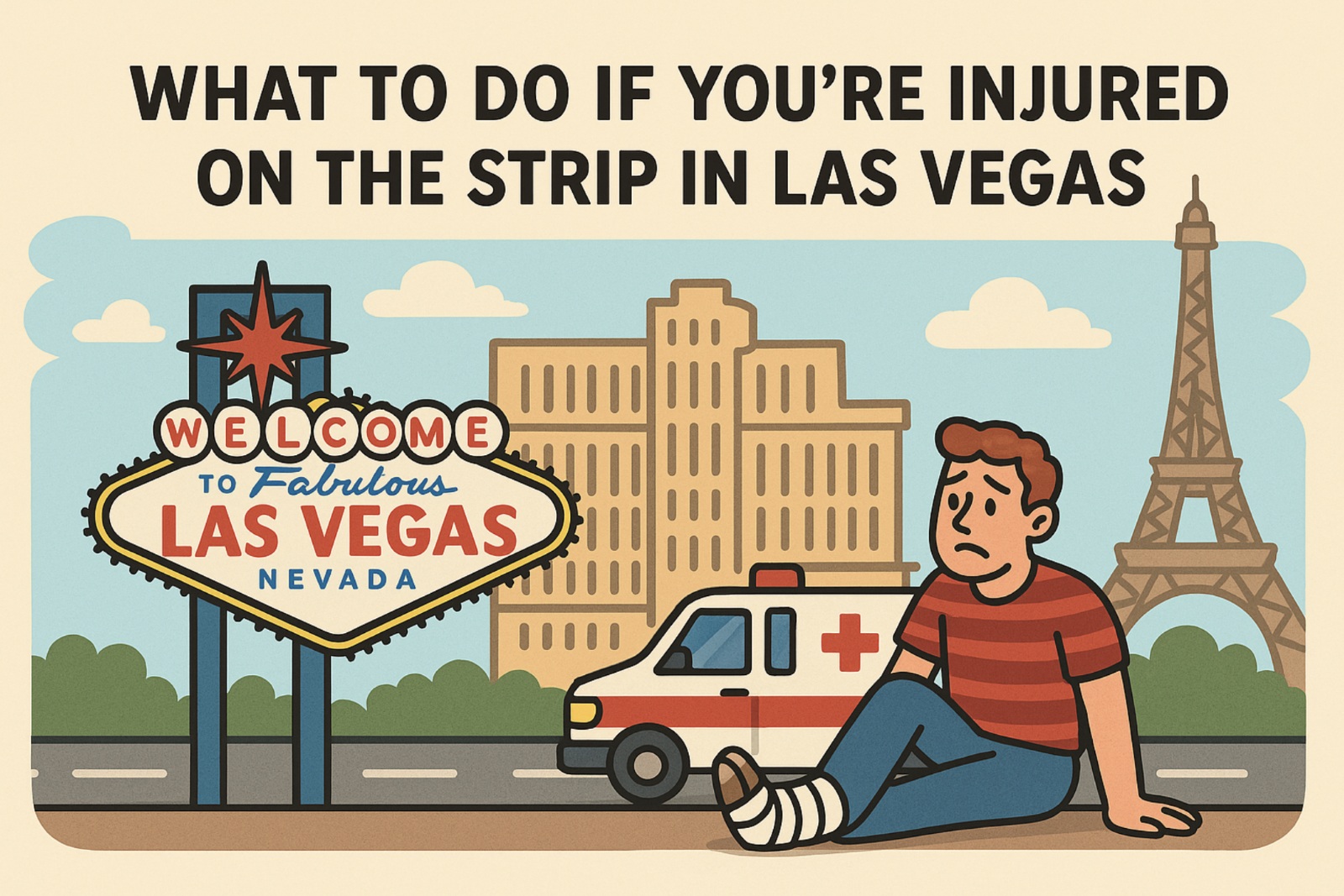
If Injured on the Las Vegas Strip — Here’s What To Do:

If Injured on the Las Vegas Strip — Here’s What To Do:

Las Vegas’s iconic Strip is a spectacle of lights, music, crowds, and nonstop excitement. Whether you’re watching the Bellagio fountains dance, club-hopping at Omnia or XS, or lounging poolside at the MGM Grand, the last thing on your mind is suffering an injury. But with so many people, moving parts, and unpredictable conditions, accidents happen more often than you’d think. 

If you’re injured on the strip while visiting the Las Vegas, especially in a hotel, casino, or entertainment venue, it’s important to understand your rights, the hidden risks, and what to do next, especially if you’re not a Nevada resident. 

Where Injuries Happen on the Strip 

When you visit the Las Vegas Strip, you expect glitz, luxury, and excitement—not a trip to the ER. But with so much foot traffic and nonstop activity, the Strip is filled with hidden hazards waiting to catch even the most cautious visitor off guard. 

Perhaps you’re strolling through the Bellagio or Venetian, admiring the grandeur of the lobby, when suddenly your foot slips on a freshly spilled drink that’s blended into the sleek, polished marble floor. Or maybe you’re heading up the escalators at Caesars Palace or The LINQ, packed shoulder-to-shoulder with other guests, when a sudden jolt or malfunction causes you to stumble and fall. 

Pool decks at places like Wet Republic or Encore Beach Club often become dangerously slick under the blazing Vegas sun, especially when tiles are cracked or drainage is poor. Nightclubs like Omnia, Hakkasan, and Marquee may draw massive crowds, but their dim lighting and tightly packed dance floors can hide tripping hazards or spills that no one’s had time to clean up. 

Even crossing the pedestrian bridges outside The Cosmopolitan or Planet Hollywood can be risky when walkways are overcrowded, uneven, or poorly lit. And it’s not just the headline attractions—you can just as easily suffer an injury in a malfunctioning elevator, trip on a torn carpet seam, or slip in a restroom with wet floors and no warning signs. 

On the Strip, danger doesn’t always look like danger. That’s why even a quick weekend getaway can leave you with lasting injuries, and a lot of questions about what to do next. 

You’re Not from Vegas — Now What? 

Out-of-state and international tourists are frequently injured on the Strip. Here’s what you need to know: 

  • Yes, you can still file a claim, even if you live elsewhere. 
  • No, you likely won’t need to keep coming back to Nevada for every step of the process. A local personal injury attorney can handle most of the case on your behalf. 
  • Yes, Nevada law applies. That’s why hiring a Las Vegas-based lawyer is so important—they understand local regulations, court systems, and how these mega-resorts operate.

Who’s Really Responsible for Your Injury? 

Most casinos and hotels are owned by massive corporations like MGM Resorts or Caesars Entertainment. On top of that, many services within these properties (nightclubs, restaurants, spas) are operated by third-party vendors or franchisees with separate liability. Determining who’s liable can be complicated. 

That’s where an experienced premises liability lawyer comes in—they can investigate whether the property owner, a contracted vendor, or even a third-party maintenance team is to blame. 

Vegas Safety Tip Sheet: What to Do If You’re Hurt 

If you’re injured on the Strip, treat it like a travel emergency. Here’s what to do in the moment: 

  1. Report it immediately to the casino or hotel management. Ask for a written incident report. 
  2. Take photos and videos of the scene, your injury, and anything that contributed to the accident (like spills, lighting, signage, or lack of warning). 
  3. Get contact info for any witnesses and staff who helped you. 
  4. Seek medical attention, preferably while still in Las Vegas. Documentation from a Nevada-based doctor is useful in your case. 
  5. Avoid making statements to hotel representatives or insurance agents without speaking to a lawyer. 

Injured on the Strip? We Can Help. 

At The Paul Powell Law Firm, we’ve helped countless visitors who were injured while enjoying the Las Vegas Strip. Whether you were hurt at a casino, resort pool, nightclub, or pedestrian walkway, we’ll fight to hold the right party accountable and help you recover compensation for your medical bills, lost income, and pain and suffering. 

Don’t let your vacation turn into a financial nightmare. Contact us today for a free consultation. We’re local, we know the Strip, and we’re here to help you get the compensation you deserve. 

Frequently Asked Questions

What should I do if I’m injured on the Las Vegas Strip?

If injured on the Strip, take these immediate steps: call 911 if you need emergency medical attention, report the incident to the property owner, hotel security, or police, document everything by taking photos of the scene, your injuries, and any hazards that caused the accident, get contact information from witnesses, seek medical treatment even if injuries seem minor (delayed symptoms are common), keep all medical records and bills, avoid giving statements to insurance companies, and contact a Las Vegas personal injury attorney as soon as possible to evaluate your case and protect your rights.

Who can be held liable for injuries that occur on the Las Vegas Strip?

Multiple parties may be liable for Strip injuries depending on the circumstances: casino or hotel owners (for slip and falls, negligent security, inadequate maintenance), restaurant or bar owners (for food poisoning, over-service of alcohol leading to assault), rideshare or taxi companies (for transportation accidents), event organizers (for crowd control failures), construction companies (for unsafe work zones), and the City of Las Vegas (for dangerous sidewalk or road conditions). An experienced attorney will identify all potentially liable parties to maximize your compensation.

How long do I have to file a personal injury claim for an accident on the Las Vegas Strip?

A: In Nevada, the statute of limitations for most personal injury claims is two years from the date of the accident. However, if your claim involves a government entity (such as the City of Las Vegas for a sidewalk defect), you may need to file a notice of claim within six months. Because the Las Vegas Strip involves major corporations with aggressive legal teams, and evidence like surveillance footage may be destroyed quickly, it’s critical to consult an attorney immediately after your accident to preserve evidence and meet all deadlines.

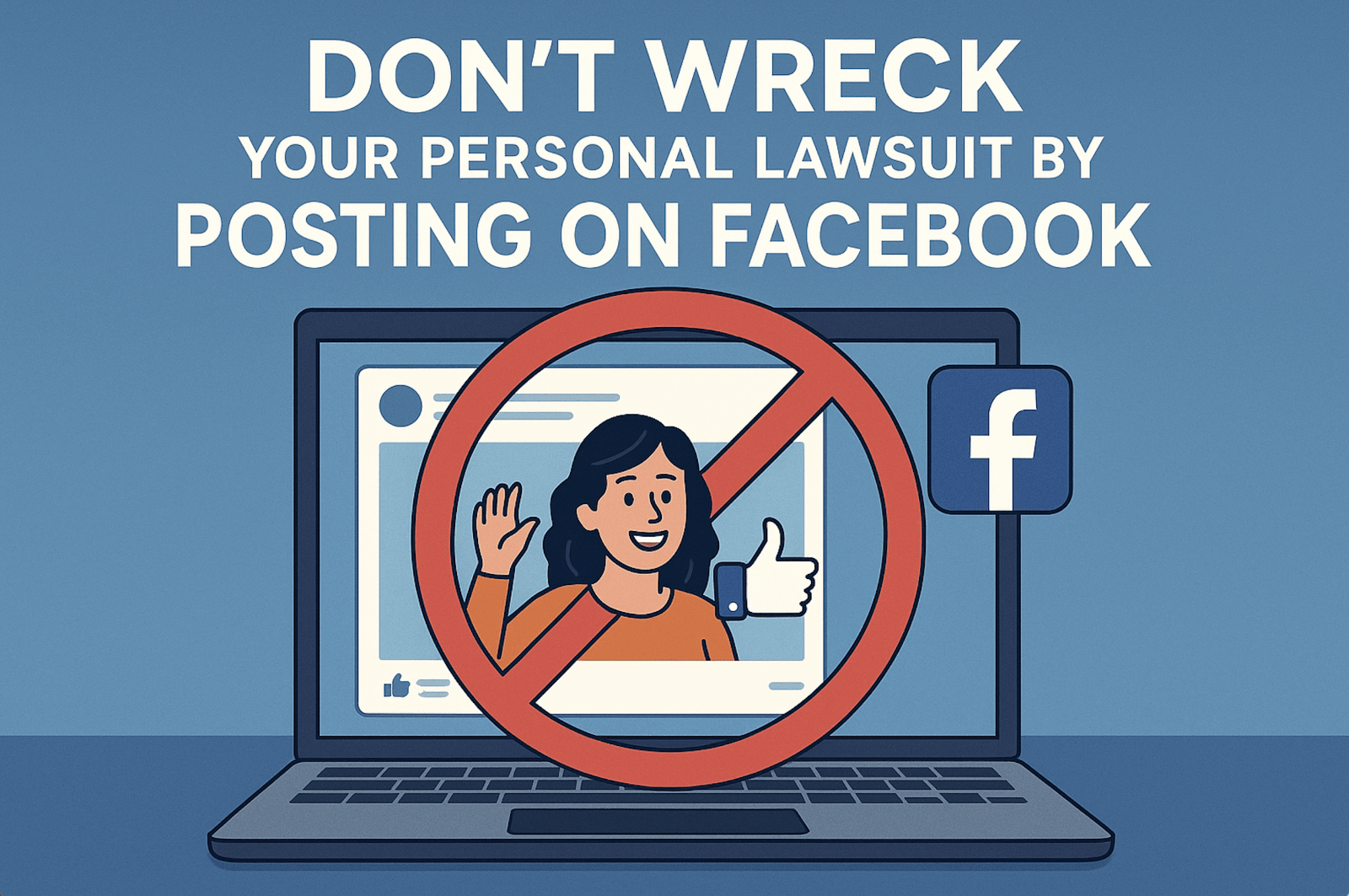
Don’t Wreck Your Personal Lawsuit by Posting on Facebook

Don’t Wreck Your Personal Lawsuit by Posting on Facebook

In today’s digital age, social media is second nature for most people. Platforms like Facebook, Instagram, Twitter, TikTok, and Snapchat help us share life events, stay connected, and express ourselves. But if you’re involved in a personal injury claim, your posts, comments, or even likes can become powerful evidence against you. 

Understanding how social media could negatively impact your personal injury case can help you protect your rights and compensation. 

Romano v. Steelcase Inc. 

In the 2010 case of Romano v. Steelcase Inc., Kathleen Romano filed a personal injury lawsuit after she injured her back and neck when a Steelcase office chair collapsed beneath her. She claimed the fall left her with serious, permanent injuries that limited her mobility and enjoyment of life. 

However, the case took a surprising turn when the defense gained access to her Facebook and MySpace accounts (yep, MySpace was still around back then!). They found photos and posts showing her traveling, socializing, and looking happy and active—contradicting her claims of being mostly confined to her home and emotionally distressed. 

The defense used this content to argue that her injuries were not as severe as described, and the judge sided with them. The court ruled that the plaintiff’s private social media content was admissible because the public content suggested she might not be as injured as she claimed. 

  • The case helped set a precedent: if your public posts contradict your claims, courts may allow access to private content. 
  • Romano v. Steelcase Inc. emphasized that expectations of privacy on social media aren’t strong when you’re putting information out into the world—even behind friend walls. 

How Insurance Companies Monitor Social Media  

Insurance companies regularly use social media (especially Facebook and Instagram!) as a tool to challenge personal injury claims. Insurance adjusters and attorneys frequently check claimants’ social media profiles, searching for posts that might undermine their case. 

Even posts that seem innocent or harmless can be twisted into damaging evidence. 

Here’s how insurers might use your social media activity against you: 

  1. Contradicting Your Personal Injury Claim  
    Posting photos or videos of physical activities, such as going to the gym, gardening, or attending social events, might seem harmless. However, insurers can argue these posts contradict your reported injuries, suggesting you’re not as injured as you claim. 
  1. Questioning Your Emotional or Mental State  
    If your injury claim involves emotional distress or pain and suffering, posting cheerful or carefree images or statuses might make insurers question the sincerity of your emotional injuries, even if these posts don’t accurately reflect your daily struggles. 
  1. Misrepresenting Your Recovery  
    Simple posts about feeling “great,” “fine,“ or “better” could be misinterpreted by insurance companies, leading them to argue your injuries are less serious than documented by your medical providers. 
  1. Using Your Friends’ and Family Members’ Posts  
    Even if you’re careful about what you post, your friends’ and family’s posts tagging you on vacation, at social events, family gatherings, or outings can be a detriment to your case by presenting an inaccurate portrayal of your condition and undermining your claim. 

Don’t Wreck Your Personal Lawsuit – What You Shouldn’t Post on Facebook 

Given the risks, it’s wise to avoid certain types of posts while your personal injury claim is pending: 

  • Detailed Information About Your Accident or Injuries.  
    Discussing your accident or injuries publicly can give insurers ammunition against your claim. They may scrutinize every word and twist it to create inconsistencies in your story. 
  • Comments or Posts About Your Case or the Opposing Party.  
    Public venting or negative comments about the insurance company, the at-fault party, or your legal process can damage your credibility and complicate negotiations. 
  • Updates About Your Personal Life.  
    Posts indicating travel, even short trips, or photos from events may be used to suggest your injury hasn’t significantly impacted your daily life. Photos or status updates like grocery shopping or short walks can be misrepresented as evidence that you’re exaggerating your condition. 

Privacy Settings May Not Protect You Fully 

Adjusting your privacy settings can help, but it doesn’t completely protect your information. Courts frequently grant requests by insurance companies and opposing attorneys to access private content if it’s relevant to your claim. Even deleting posts might not fully protect you—content can be retrieved, and deleting material after litigation starts might be seen negatively by the court. 

How to Safely Manage Your Social Media During a Personal Injury Case 

To protect your claim, consider these best practices: 

  • Minimize or Avoid Posting 
    Temporarily limit your social media presence during your claim. Taking a break entirely from social media may be the safest option. 
  • Be Cautious About Accepting Friend Requests 
    Do not accept friend requests from strangers or unknown individuals. Insurers or attorneys sometimes attempt to gain access this way. 
  • Inform Friends and Family 
    Let your friends and family know that you would prefer they not tag you or post about your activities, especially if they involve physical or social events. 
  • Review Past Posts 
    Before filing your claim, consider reviewing older posts and consulting with your attorney to see if anything could potentially harm your case. 

Personal Injury Attorney 

Navigating the complexities of social media during a personal injury claim can be daunting. At The Paul Powell Law Firm, we advise our clients carefully about the use of social media throughout their claims process. Our experienced attorneys know how insurers leverage social media, and we can guide you to avoid common pitfalls that might jeopardize your case. 

If you or a loved one has been injured due to someone else’s negligence, don’t risk your claim by unknowingly making harmful social media mistakes. 

Contact The Paul Powell Law Firm today by visiting our contact page or calling us directly. We’ll help protect your rights and fight aggressively to ensure you receive the compensation you deserve. 

Statute of Limitations to File a Personal Injury Claim in Nevada

Statute of Limitations to File a Personal Injury Claim in Nevada

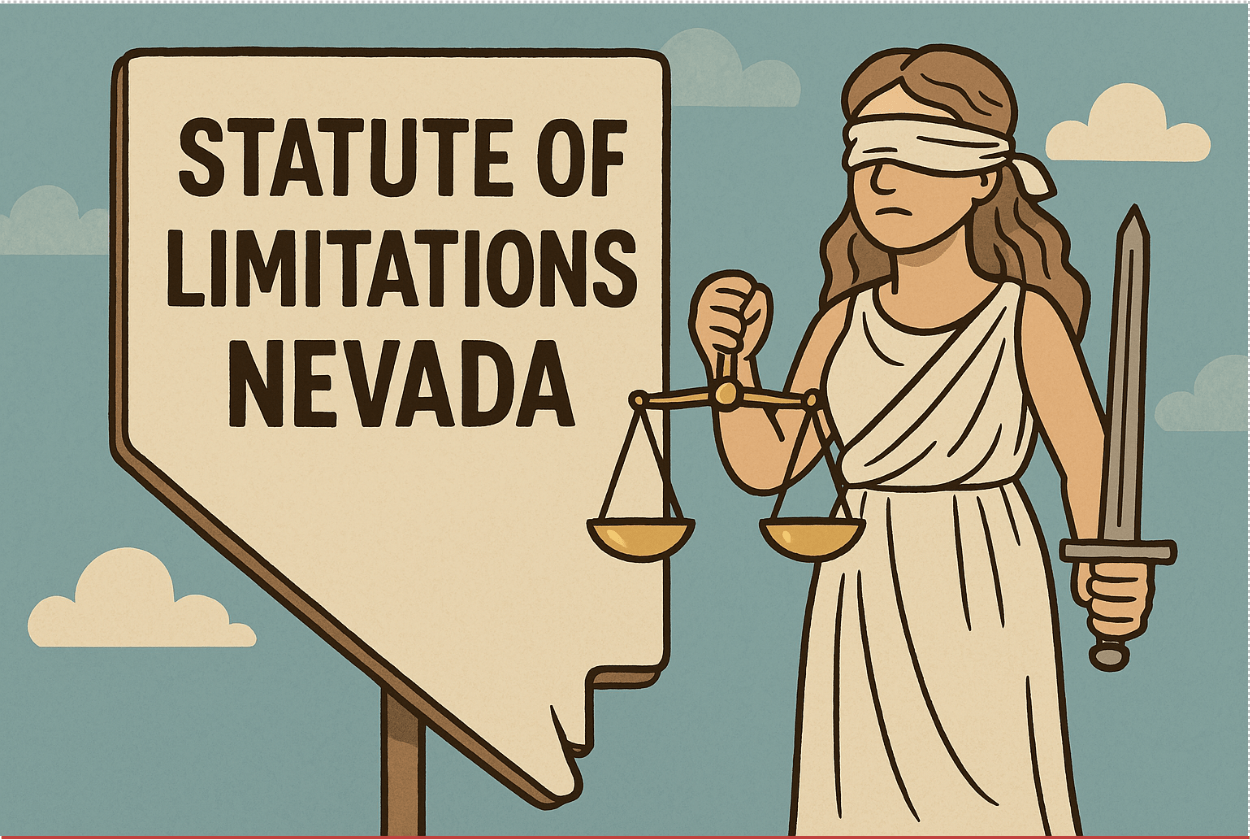
A statue next to a sign with the text "Statute of Limitations Nevada" on it.

If you’ve been injured in an accident in Nevada, you must understand the statute of limitations, which is the timeframe you have to file a lawsuit. Missing this crucial deadline could prevent you from recovering compensation. Knowing these deadlines is vital for protecting your rights and securing the compensation you deserve. 

Personal Injury Statute of Limitations in Nevada 

In Nevada, the statute of limitations for most personal injury cases 2-years from the date of the injury. This includes claims for car accidents, wrongful death cases, slip and falls, and most other general personal injury incidents. If you miss this 2-year window, you may lose your opportunity to pursue compensation for medical bills, lost wages, pain and suffering, and other damages. 

Statute of Limitations for personal injury: 2-years

However, it’s important to distinguish between filing a lawsuit and filing an insurance claim. Insurance companies often require prompt notification—sometimes within days or weeks of an incident. Delaying this report can negatively affect your claim, even if you’re still within the legal filing deadline. 

Certain cases may have different deadlines or requirements: 

  • Medical Malpractice Cases – These claims must be filed within 3-years from the injury date or within one year from the discovery of the injury, whichever occurs first (Nev. Rev. Stat. § 41A.097). Because these cases often involve complex medical evidence and testimony, consulting an attorney immediately after discovery is critical. 
  • Claims Against Government Entities – You typically have just 6-months from the date of injury to file a formal notice of claim if your injury involved a Nevada government agency (Nev. Rev. Stat. § 41.036). Missing this shortened deadline can permanently bar you from seeking compensation from a government entity (such as the City of North Las Vegas). 

Given these complexities, it’s important to consult with a Nevada personal injury attorney as soon as possible. At The Paul Powell Law Firm, we offer free case evaluations to help you understand your rights and deadlines.

Exceptions That Could Change Your Filing Deadline 

Certain circumstances may extend or alter the statute of limitations for personal injury: 

  1. The Discovery Rule – If injuries are not immediately evident, the two-year limit could start when the injury is discovered or reasonably should have been discovered. 
  2. Minors and Individuals with Disabilities – For victims under 18 or individuals who are mentally incapacitated, the statute of limitations may be extended until they reach legal adulthood or regain capacity. 
  3. Defendant Leaving the State – If the at-fault party leaves Nevada after causing your injury, the deadline could be paused until they return. 

Why Filing Early Makes a Difference 

Even though Nevada law provides you with 2 years to file your personal injury claim, acting fast will help strengthen your case: by: 

  • Preserving Evidence: Evidence can quickly disappear or become unreliable as time passes. Surveillance videos may be erased, witness memories can fade, and physical evidence like accident debris or damaged vehicles might be repaired or lost. Prompt action helps ensure this critical evidence is available to support your case. 
  • Reducing Risk of Claim Denial: Insurance companies frequently use delays as a basis to deny or undervalue claims, arguing that injuries weren’t serious enough to warrant immediate action. Filing promptly demonstrates the seriousness of your injuries and prevents insurers from easily undermining your claim. 
  • Allowing for Thorough Investigation: Your attorney will need time to collect detailed evidence, consult witnesses, and build a comprehensive case. Early involvement ensures your legal team has ample opportunity to thoroughly investigate, increasing the likelihood of securing fair compensation. 

Speak with an Experienced Nevada Personal Injury Lawyer Today 

If you or a loved one has been injured, navigating Nevada’s personal injury laws can be complicated. At The Paul Powell Law Firm, we provide dedicated, aggressive representation to help victims secure the justice and compensation they deserve. 

Contact us today for a free consultation by visiting our contact page or calling us directly at (702) 728-5500.

Let us help you protect your rights and recover the compensation you need. 

Is it safe to drive in Las Vegas?

Is it safe to drive in Las Vegas?

Las Vegas Strip at night in Nevada, USA

Did you know that car insurance in Las Vegas is among the most expensive in the United States? 

Let’s face it – driving in Las Vegas is different than in any other city. Drivers can be careless, tourists make sudden lane changes, people are distracted with cell phones, and road rage is a real thing. This is also Las Vegas where residents and tourists alike can drink any time, day or night. 

Las Vegas and New Orleans are the only two US cities that allow bars and clubs to stay open 24/7. And Nevada is the only state where alcohol can be purchased at any time   beer and liquor. 

You’ll also notice that construction is everywhere, and car accidents or road congestion can stop traffic often and abruptly. The Vegas Strip is always congested, and during peak times, parking is a nightmare. 

For tourists who rent cars, Las Vegas residents, pedestrians, and cyclists who navigate to and from destinations across the metropolitan area, the following tips will help you survive Las Vegas driving.

Beware of Las Vegas Rush Hours

Las Vegas is a 24-hour city where normal rush hour times of day do not apply. Residents of Las Vegas work at all hours of the day and night. Unlike other big cities where work weeks are typically Monday through Friday, 8am to 5pm, rush hour in Vegas happens multiple times a day. Las Vegas rush hour times: 

3:00-4:00 PM, for example, is when most of the Strip workers head to their evening shifts. And then there’s another one from midnight to 1am when they get off work.  

The Bellagio casino is rumored to have 4,000 employees at their main location on the Strip. Add in the fact that there’s a dozen other casinos of similar size and the usual traffic, and you’ll get a sense for how many vehicles that is.

However, typical rush hour congestion in Las Vegas consists of locals, passer-byers and tourists traveling on the main roads. Most traffic occurs in the morning rush hours from 7:00 am until 9:00 am and evening hours from 4:00 until 6:00 pm. During these busiest times of day, if you are traveling east to west, or west to east, you are well advised to avoid crossing the Strip at major intersections like Sahara, Flamingo, and Tropicana Avenues. 

If you have to use major highways, settle back and be patient. The stop-and-go traffic will drive you crazy if you let it. You can always count on certain areas for congestion during rush hours:  

  • Spaghetti Bowl adjacent to the northwest side of downtown Las Vegas where I-15 and Highway 95 meet
  • Southbound I-15 from about Washington all the way to Tropicana 
  • Northbound I-15 from Tropicana as far north as Cheyenne Boulevard

The 215 beltway is unpredictable with rush hour traffic snarls typically occurring where it meets Highway 95, meets I-15, slows down around the Durango to Tropicana curve on the southside, and jams up as traffic exits off northbound ramps heading out past Sahara Avenue. 

Driving the Las Vegas Strip 

The Las Vegas Strip is slow-going most of the time, especially on weekends. Industry conventions and 3-day weekends can transform it into Times Square. 

The Las Vegas Strip has the most traffic after 4:00pm weekdays, and on the weekends after about 11am. 

Nearby parallel roadways provide alternate access to major destinations on the Strip and tend to move faster than trying to travel down Las Vegas Boulevard. These streets include Industrial Road and Frank Sinatra Drive located west of the Strip and Paradise Road just east of the Strip. For longer journeys to destinations on the Strip, say more than a few blocks, traveling north or south in the city, it is usually worth taking I-15, which runs parallel to the Las Vegas Strip.  

Driving Under the Influence

In Nevada, licensed adults 21 years of age and older risk the very real reality of getting arrested for driving under the influence if their blood alcohol level is 0.08 or higher. Don’t chance it! And if you’re an intoxicated, unlicensed driver who gets stopped by Metro, “What were you thinking?” doesn’t even begin to cover it! While recreational use of marijuana is legal in the State of Nevada, you have to be over 21 years of age to be legal.  

** Driving under the influence (DUI) of marijuana is a crime and treated much the same as a DUI for alcohol. 

Instead of risking a DUI felony, here’s 4 alternatives: 

  • Ride-sharing with Uber or Lyft. 
  • Las Vegas Monorail: it runs the length of the Strip and stops at seven points along the way 
  • Free shuttle rides: many available at off-the-strip hotels and casinos 
  • Taxis: they’re everywhere! 

There’s even cheap public transportation that runs from the Strip to Downtown Las Vegas/Fremont Street. Deuce on the Strip, SDX Strip and Downtown Express are economical and reliable ways to get around. It stops at nearly every property on the Strip and has its own lane to get you there quicker!

Home of the Construction Cone 

Nevada is notorious for being “Home of the Construction Cone” because it’s in a constant state of growth. In Las Vegas, roadwork is a common sight and a daily driving obstacle. Drivers need to pay close attention to signage, watch speed, conform to the lines of highway cones, and prepare for sudden traffic stops along the way.

For current traffic reports and road conditions in Nevada, call 1-877 NV ROADS or see visit https://www.nvroads.com/.  

Parking on the Las Vegas Strip 

Las Vegas Blvd. also known as the Las Vegas Strip has no street parking, but there are parking garages and valets at almost every hotel and casino. Be aware that most Strip casinos today (unlike a few years ago), now charge you for self-parking.  

Parking prices on the Strip: 

  • Regular parking cost between $22 to $30
  • Self-parking rates are $12 to $35 (depending on duration and location)
  • Valet parking rates are $24 to $45 (depending on duration, location and schedule of events) 
  • ** Some downtown casinos charge hourly rates as well. 

While there is some limited street parking available in the downtown area of Las Vegas, self-parking garages at major downtown casinos are probably the safest. Usually, if you are parked less than 1-hour, there is no charge. Also, some casinos offer validation stamps if you were in a restaurant or attractions, so be sure and take your parking stub in with you.

Las Vegas Street Parking 

Parking regulations on streets around Las Vegas are strictly enforced. 

If you’re parked at a meter, feed it and closely watch your time. Use street parking only when you truly lack options or when you know for sure you’re jumping out for a short time. 

Semi-Truck Accidents

Semi-Truck Accidents

Car after a collision with a heavy truck

Semi-trucks can present extreme dangers because of their massive weight and size. In fact, the Federal Motor Carrier Safety Administration reports that truck accidents result in one or more fatalities 98 percent of the time. The severity of these types of wrecks makes getting prompt legal help after a semi-truck accident absolutely crucial. 

The massive damage and loss of life resulting from semi-truck accidents also lead to large costs for liability insurance, damages, and settlements. These factors cause trucking companies, insurance companies, and truck owners to fight tooth-and-nail to deter and minimize your injury case. If the transportation insurance company wins you’ll have to pay for all medical bills and damages out of your own pocket. As an accident victim, hire a good lawyer to represent you and be prepared to fight for your rights. Read on to learn more about accidents involving semi-trucks and passenger vehicles. 

4 Factors in a Semi-Truck Accident Claim 

Las Vegas Semi-truck accidents usually occur on the freeways and highways, such as the 215 beltway and Interstates 15 and 95. The combination of a large trucks moving at 65+ mph, and lack of maneuverability and longer breaking distances, can results in enormous amounts of damage and personal injury. 

Factors that can raise the value of a semi-truck accident claim include: 

  1. Unlawful Driving 
  • ​Strict rules are enforced to ensure semi-truck drivers take appropriate care of their vehicles and their conduct. Regulations control how long a truck driver may be on the road and the length of breaks they must take. However, some trucking firms often encourage drivers to break these rules, making accidents more likely. If a driver is trying to meet or beat their deadline, accidents can occur. ​ 
  1. Impaired Driving 
  • ​It was once very common for commercial drivers to use caffeine pills and other “pep pills” to maintain long shifts. Naturally, these pills only mask the symptoms of sleep deprivation – using them can actually make it harder to drive rather than easier. Nowadays the use of energy drinks is prevalent. Consequently, drowsy driving can be as deadly as drunk driving. 
  1. Distracted Driving 
  • ​Distracted driving affects all motorists. In several states, using a cell phone, for example, in anything but a hands-free manner while on the road is unlawful. Additionally, during legal proceedings finding a cell phone was in use while driving can demonstrate that the driver was unfit at the time to operate a semi-truck, even if not otherwise impaired. 
  1. Malfunctions and Mechanical Failure 
  • Malfunction or the mechanical failure of parts can be involved in a personal injury case. Negligence in maintenance and servicing or a product defect may be causes or contributing factors in accidents.  
  • When a part malfunctions, the issue becomes – what caused it? If the part requires regular inspection and maintenance – the part may have failed due to human neglect or error. If that is involved, then someone is negligent. 
  • On the other hand, if the product failed due to a defect from the manufacturer, there is good reason to pursue a product defect claim. Your attorney has to prove that the product was indeed defective and that the defect caused injury. 

All the factors above could help establish that a semi-truck driver behaved in a reckless or negligent way behind the wheel. When such egregious behavior takes place, a sharp attorney will  strive to level punitive damages to compensate you in addition to the amount you are seeking. These damages typically apply to the trucking company or the manufacturer and not to the individual truck driver. 

Proving Negligence 

Typically, when it comes to large vehicles – large trucks, semi-trucks, big rigs, or 18 wheelers – the truck driver and trucking companies are required to comply with stringent governmental regulations and make regulated safety precautions.  

Semi-truck regulations include: 

  • Special driving licenses 
  • Federal tracking safety regulations 
  • Inspections at weight stations 
  • Keeping sleep and break logs  

In lawsuits, accident lawyers have to prove that the truck driver neglected all or some of these rules and connect that negligence to the accident and victim’s injuries. Once these connections have been made, the lawyer may file a claim to get compensation for current and future medical bills, lost wages, and pain and suffering. 

Semi-Truck Accident Settlement Amounts

What is the average semi-truck accident settlement? The truth is, even an experienced accident attorney can’t cite a precise figure off the top of their head. Settlement amounts range from a few hundred dollars to several million depending on: 

  • The severity of your injuries and associated costs 
  • Lost wages and opportunities 
  • The truck driver’s conduct 
  • Mitigating circumstances, such as severe weather, and 
  • Other factors that may have contributed to the accident​​ 

Contact the Powell Law Firm Today 

Getting a semi-truck accident attorney is the best way to pursue justice you rightly deserve. So don’t wait; contact The Powell Law Firm to find out more. More Lawyer. Less Fee. 

Tourist Injuries in Las Vegas: What Happens When You’re Hurt on Vacation?

Tourist Injuries in Las Vegas: What Happens When You’re Hurt on Vacation?

Yellow sign caution wet floor standing near falling man closeup

Las Vegas is one of the most popular tourist destinations in the world, attracting millions of visitors each year. With its dazzling lights, world-class entertainment, and 24/7 excitement, it’s easy to get caught up in the fun. 

However, accidents can happen anywhere, and when they do, being an out-of-state visitor can make the situation even more complicated. From car accidents to hotel negligence, understanding your rights and the legal process is essential if you’ve been injured while vacationing in Las Vegas. 

Common Tourist Injuries in Las Vegas 

Tourists in Las Vegas may face a variety of hazards that can lead to serious injuries, including: 

  • Car Accidents – Whether using a rental car, rideshare service, or taxi, visitors unfamiliar with local traffic laws and high-speed roadways can find themselves involved in accidents. 
  • Hotel & Casino Negligence – Slip and falls, broken furniture, poorly maintained pools, or falling objects can cause severe injuries within hotels and casinos. 
  • Nightclub & Bar Incidents – Overcrowding, spills, poorly maintained stairs, and negligent security can lead to accidents or even assaults. 
  • Pedestrian Accidents – The Strip and downtown areas are packed with foot traffic, increasing the risk of pedestrian-vehicle accidents. 

Legal Challenges for Injured Tourists 

Being injured in a state where you don’t reside presents unique legal challenges. Here’s what tourists need to know: 

  • Where to File a Claim – If your injury occurs in Las Vegas, you will likely need to file your personal injury claim in Nevada. Even if you live in another state, Nevada law will generally apply. This can make the legal process feel overwhelming, but an experienced Nevada attorney can handle your case locally, ensuring all paperwork is filed correctly and deadlines are met. 
  • Returning to Nevada for Legal Proceedings – Many injury claims are settled out of court, meaning you may not need to return to Nevada. However, if a trial is necessary, your attorney can often appear on your behalf for many proceedings, minimizing your need to travel. Modern legal processes also allow for remote consultations and depositions, making it easier to participate in your case without being physically present. 
  • Dealing with Insurance Companies – Insurers may try to take advantage of tourists, offering low settlements or delaying claims, knowing that out-of-state visitors may not be able to fight back easily. A Nevada personal injury lawyer can negotiate aggressively on your behalf, ensuring you receive fair compensation for medical expenses, lost wages, and pain and suffering. 

If You’re Injured While Visiting Las Vegas 

If you’re hurt while on vacation, taking the right steps can protect your health and strengthen your case: 

  1. Seek Immediate Medical Attention – Visit a local hospital or urgent care to document your injuries and receive treatment. 
  2. Report the Incident – Notify the appropriate party, whether it’s hotel management, casino security, or the police. 
  3. Gather Evidence – Take photos of the scene, your injuries, and any hazards that contributed to the accident. 
  4. Obtain Witness Information – If others saw what happened, get their contact details for future statements. 
  5. Consult a Local Personal Injury Lawyer – An attorney based in Nevada can handle legal matters on your behalf, allowing you to focus on recovery. 

How The Paul Powell Law Firm Can Help 

At The Paul Powell Law Firm, we understand the difficulties tourists face after an injury in Las Vegas. We work tirelessly to ensure out-of-state victims receive fair compensation without unnecessary travel or stress. Our legal team handles everything from investigating the accident to negotiating with insurance companies and pursuing claims in Nevada courts when necessary. 

If you’ve been injured while visiting Las Vegas, don’t wait. Contact us today for a free consultation by visiting our contact page, and let us fight for the compensation you deserve. 

The Hidden Dangers of Las Vegas Casinos: Slip & Fall Accidents You Didn’t See Coming

The Hidden Dangers of Las Vegas Casinos: Slip & Fall Accidents You Didn’t See Coming

Police line - Do Not Cross

Las Vegas casinos are known for their glamour, excitement, and high-energy atmosphere. However, beneath the flashing lights and ringing slot machines, hidden dangers lurk.  

Slip and fall accidents are among the most common hazards in these bustling establishments, often caused by preventable conditions like spilled drinks, worn carpets, and poor lighting. If you’ve been injured in a Las Vegas casino, understanding your rights and taking immediate action can make all the difference in your recovery. 

Common Slip & Fall Hazards in Casinos 

Casinos are designed for entertainment, but their crowded and often chaotic environments present numerous risks to guests. Some of the most common hazards include: 

  • Spilled Drinks & Slippery Floors – With drinks being served constantly, wet floors are a serious concern, especially in high-traffic areas. 
  • Torn Carpets & Uneven Flooring – Heavy foot traffic can cause carpets to wear down or tear, leading to tripping hazards. 
  • Dim Lighting & Obstructed Walkways – While casinos use low lighting to create ambiance, it can also make it difficult to see obstacles, steps, or spills. 
  • Escalator & Stairway Dangers – Poorly maintained escalators and staircases can lead to serious falls. 
  • Neglected Restrooms & Common Areas – Wet floors, missing “Caution” signs, and general disrepair in casino restrooms create additional risks. 

What to Do If You Slip & Fall in a Casino 

If you experience a slip and fall accident in a Las Vegas casino, taking the right steps immediately can help protect your health and strengthen your legal claim: 

  1. Seek Medical Attention – Your health should always be your top priority. Even if injuries seem minor, getting a medical evaluation ensures that any hidden injuries are documented. 
  2. Report the Incident – Notify casino management or security as soon as possible. Request a written report and ensure you obtain a copy. 
  3. Document the Scene – Take photos of the hazard that caused your fall, such as a wet floor or torn carpet. Gather contact information from any witnesses. 
  4. Avoid Speaking to Insurance Adjusters Alone – Casinos and their insurers may try to downplay your injury or shift blame. Consult a personal injury attorney before providing statements. 
  5. Contact a Personal Injury Lawyer – An experienced attorney can help you navigate Nevada’s premises liability laws and ensure you receive fair compensation. 

How Nevada Law Protects Victims of Negligence 

Nevada premises liability law requires businesses, including casinos, to maintain a safe environment for guests. When property owners fail to address known hazards or warn patrons about potential dangers, they can be held liable for injuries. 

To prove negligence in a slip and fall case, an injured party must show: 

  • The casino had a duty to maintain safe conditions for visitors. 
  • The casino knew or should have known about the hazardous condition. 
  • The casino failed to take reasonable steps to fix or warn about the hazard. 
  • The hazardous condition directly caused the victim’s injuries. 

Casinos and their legal teams often fight hard to avoid liability, making it crucial to have strong legal representation on your side. 

Get the Compensation You Deserve 

Slip and fall accidents in Las Vegas casinos can result in serious injuries, from broken bones to head trauma. If you or a loved one has been injured due to a casino’s negligence, you should speak with a qualified attorney for a free case evaluation. You have the right to seek compensation for medical expenses, lost wages, pain and suffering, and more. 

At The Paul Powell Law Firm, we have extensive experience holding large corporations accountable for unsafe conditions.  

Contact us today for a free consultation by visiting our contact page, and let us fight for the justice and compensation you deserve.