
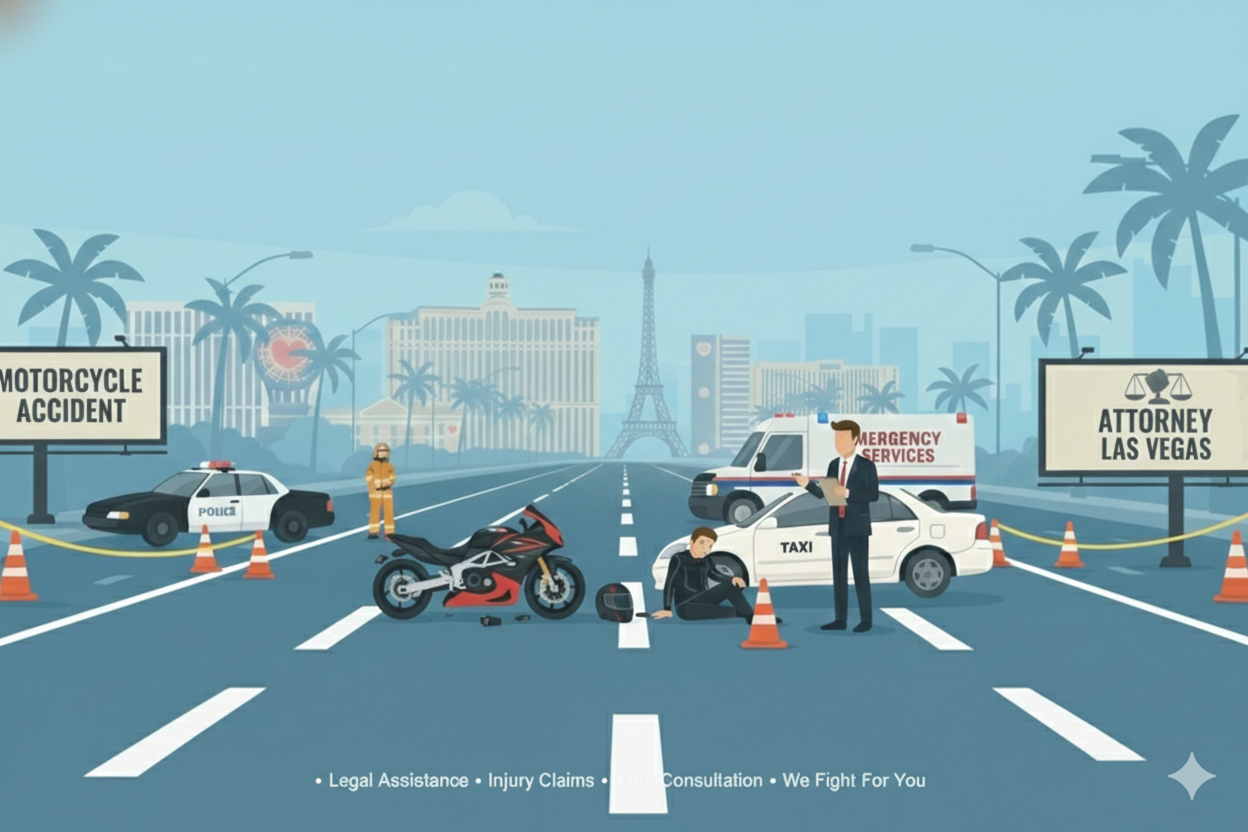
A motorcycle accident in Las Vegas can change everything in seconds. Maybe you were clipped by a distracted driver near the Strip, cut off by a rideshare vehicle pulling over without warning, or hit on I-15 or US-95 by someone driving too fast for traffic. Whether you’re a local rider navigating daily commutes or a visitor enjoying Nevada’s open roads, the aftermath can feel overwhelming—painful injuries, medical bills, missed work, and insurance calls that start far too soon.
Here’s the good news: you have rights, and Nevada law provides meaningful protections for injured motorcyclists—including out-of-state tourists. The key is knowing what to do next, what deadlines apply, and how to avoid common insurance traps.
In this guide, you’ll learn five essential things every rider should know after a crash in Las Vegas—plus practical steps you can take right now. The Paul Powell Law Firm has recovered nearly $500 million for injury victims, including a $4.9 million motorcycle crash settlement involving a brachial plexus injury. If you need help, we’re available 24/7.
Learn about your options after a Las Vegas motorcycle accident on our main practice page:
Las Vegas Roads Present Unique Dangers for Motorcyclists
Las Vegas is a different kind of riding environment. The city blends local commuters with constant tourism, heavy commercial traffic, and a nightlife scene that pushes DUI risk higher—especially on weekends and holidays. Even experienced riders can get caught off guard.
Some of the biggest local hazards include:
- The Las Vegas Strip: bumper-to-bumper traffic, sudden lane changes, and drivers stopping unexpectedly for hotels, attractions, or “just one more photo.”
- Rideshare and taxi traffic: Uber/Lyft drivers often pull over suddenly, make quick U-turns, or stop mid-block to pick up passengers—high-risk scenarios for riders.
- I-15 and US-95: high speeds + aggressive driving + merging vehicles can be a dangerous mix, especially when traffic compresses.
- Construction zones: lane shifts, uneven pavement, and reduced visibility can be especially hazardous for motorcycles.
- Desert heat: fatigue and dehydration can affect reaction time; hot road surfaces can impact traction and tire performance.
- Nightlife and impaired driving: more drunk or drug-impaired drivers on the road means increased crash risk.
Motorcycle fatalities and serious crashes remain a serious concern across the Las Vegas Valley, with local outlets and LVMPD reporting ongoing fatal motorcycle collisions in the area.
Why Tourists Face Additional Risk
Visitors often deal with extra challenges:
- Unfamiliar roads and confusing interchanges
- Rental motorcycles that feel different than their home bike
- Distraction from scenery, navigation apps, and attractions
- Jet lag and vacation fatigue
- Unfamiliar “local driving behaviors,” especially around resort corridors
Nevada Law Protects Injured Motorcyclists—But There Are Important Deadlines
If your crash happened in Nevada, Nevada law applies—even if you live somewhere else. That matters because key legal rules can affect both your timeline and your compensation.
Nevada’s Comparative Negligence Rule
Nevada uses a modified comparative negligence system (NRS 41.141). In plain terms, you can still recover damages if you’re partly at fault—as long as you are not more than 50% at fault. Your compensation is reduced by your percentage of fault.
Statute of Limitations: The Clock Is Real
For most personal injury claims in Nevada, you typically have two years to file a lawsuit (NRS 11.190). Waiting too long can mean losing your right to pursue compensation entirely.
Just as important: evidence can disappear quickly—surveillance footage gets deleted, witnesses become hard to find, and insurers build their narratives early.
Helmet Law: It Matters, But It’s Not the Whole Case
Nevada requires helmets for motorcycle riders and passengers (NRS 486.231). Insurance companies often try to weaponize helmet issues—especially around head injuries—but helmet questions don’t automatically erase your right to pursue a claim.
Nevada Insurance Minimums May Not Cover Serious Motorcycle Injuries
Nevada’s minimum liability coverage is 25/50/20 ($25,000 per person, $50,000 per accident, $20,000 property damage). That often isn’t enough for serious motorcycle injuries, which may involve surgeries, hospital stays, and long-term rehab.
That’s why uninsured/underinsured motorist coverage (UM/UIM) can be so important—and why an attorney will also look for other sources of recovery.
What Out-of-State Visitors Need to Know
Tourists often worry they “can’t handle a case from home.” In reality:
- Nevada law still governs the crash.
- Many steps can be handled remotely (phone/video consults, e-signature documents).
- A Las Vegas-based lawyer can manage local coordination, records requests, and communication with Nevada insurers.
Motorcycle Accident Injuries Are Often More Severe Than Car Accident Injuries
Motorcyclists don’t have the protective frame, airbags, and seatbelts that car occupants do. When a crash happens, riders absorb the impact—often resulting in injuries that are both physically and financially devastating.
Common serious motorcycle injuries include:
- Traumatic brain injuries (TBI) (even with a helmet)
- Spinal cord injuries and paralysis
- Broken bones (pelvis, femur, ribs, wrists)
- Road rash and deep abrasions that can lead to infection or scarring
- Internal organ injuries
- Brachial plexus injuries (nerve damage affecting the arm/shoulder)
- Amputation
- PTSD and emotional trauma
In many cases, the biggest issue isn’t just the ER visit—it’s the long-term consequences: multiple surgeries, extended rehab, chronic pain management, and reduced earning capacity.
That’s why documentation matters. A serious motorcycle injury claim isn’t only about what happened at the scene. It’s also about proving:
- What your medical needs are now
- What your future care will cost
- How your injuries affect your work, mobility, and daily life
Why You Need Medical Documentation
- Get medical care right away—even if you feel “mostly okay.”
- Follow treatment recommendations and attend follow-ups.
- Keep records: bills, prescriptions, physical therapy, mileage, and time missed from work.
- Track your symptoms and day-to-day limitations.
For severe outcomes, see: Fatal motorcycle accidents in Clark County
Insurance Companies Often Try to Minimize Motorcycle Accident Claims
Insurance adjusters are trained to protect the company’s bottom line—not to make sure you’re okay. And motorcycle claims are often treated differently because of “biker bias.”
Common tactics used against riders:
- Blaming the motorcyclist (“motorcycles are dangerous,” “you must have been speeding”)
- Misrepresenting the crash using selective statements or incomplete reports
- Pushing quick settlements before you know your full diagnosis or future care needs
- Requesting recorded statements designed to lock you into phrasing they can use later
- Downplaying injuries, especially soft tissue injuries, TBIs, or nerve damage
- Delaying the claim, hoping you’ll give up or accept less due to financial stress
The “Biker Bias” Problem
Some adjusters—and sometimes jurors—hold stereotypes about riders being reckless. A strong claim pushes back with evidence: medical records, crash reconstruction, witness statements, and clear explanations of how and why the collision happened.
What to Do When the Insurance Company Calls
- Don’t give a recorded statement without legal advice.
- Don’t sign releases or accept quick money “to help with bills.”
- Don’t guess about speed, distance, or timing.
- Do gather documents and get a case review before negotiations begin.
If the crash involved a drunk driver, learn about your options.
Choosing the Right Motorcycle Accident Attorney Makes a Significant Difference
Not every personal injury lawyer handles motorcycle cases the same way. These claims often require deeper investigation, stronger medical proof, and a strategy to counter bias.
What to look for:
- Motorcycle-specific case experience (not just general PI)
- A track record of results (settlements/verdicts)
- Familiarity with Clark County courts and local procedures
- Resources to investigate quickly
- Willingness to prepare the case as if it may go to trial
Why Local Insight Matters in Las Vegas
A local Las Vegas motorcycle accident lawyer understands:
- Strip traffic patterns and common crash zones
- How rideshare activity impacts collisions
- Local reporting practices (NHP vs Metro, depending on location)
- The medical providers and treatment pathways are common in the Valley
The Paul Powell Difference
- “More Lawyer. Less Fee.” — We never take more money than you at the end of your case
- Nearly $500 million recovered
- 75+ million-dollar results
- Nearly two decades of serving Las Vegas
- No fees unless we win
- Help available 24/7: (702) 728-5500
Serving Tourists and Out-of-State Clients
If you’re visiting from another state, you can still pursue a Nevada claim. We can:
- Handle the process remotely so you can focus on recovery
- Coordinate records and communication across state lines
- Manage filings and court appearances locally
- Provide regular updates by phone, email, or video
Protect Your Ride and Your Rights in Las Vegas
Whether you ride Las Vegas roads every day or you’re visiting and renting a bike for the weekend, a motorcycle crash can leave you facing serious injuries and major uncertainty. Remember these five essentials: Las Vegas has unique riding hazards, Nevada deadlines matter, motorcycle injuries are often severe, insurers may try to minimize your claim, and choosing the right motorcycle accident lawyer can make a real difference.
If you were injured, time matters—evidence can disappear, and Nevada’s statute of limitations applies. You deserve a team that understands both local challenges and the extra complications tourists face.
Frequently Asked Questions
How much does a motorcycle accident lawyer cost in Las Vegas?
Most motorcycle accident lawyers—including Paul Powell—work on a contingency fee basis. That means no upfront cost and no attorney fees unless the case is successful. The fee is a percentage of the recovery. At The Paul Powell Law Firm, we also stand by “More Lawyer. Less Fee.”—We never take more money than you at the end of your case.
What should I do immediately after a motorcycle accident in Las Vegas?
Get medical care first. Call 911 so the crash is documented. If you can, take photos of the vehicles, road conditions, and your injuries, and collect witness contact info. Avoid discussing fault at the scene. Before speaking in detail with insurance adjusters, consider getting a case review so you don’t accidentally harm your claim.
Can I file a claim if I wasn’t wearing a helmet in Nevada?
Yes, you can still file a claim. Nevada requires helmets (NRS 486.231), but not wearing one doesn’t automatically erase your right to seek compensation. Insurers may argue your injuries were worse because of it, which can affect damages. A lawyer can help address these arguments and keep the focus on the other driver’s negligence.
How long do I have to file a motorcycle accident lawsuit in Nevada?
In Nevada, most personal injury cases must be filed within two years under NRS 11.190. Waiting can weaken your case because evidence (like video footage) may be lost, and witnesses may be harder to locate. If your injuries are serious, it’s smart to talk to a lawyer as soon as possible to protect key proof.
What if I’m a tourist injured in a Las Vegas motorcycle accident?
You have the same right to pursue a claim as a Nevada resident. Nevada law applies to accidents that happen here, and many legal steps can be handled remotely. A Las Vegas motorcycle accident lawyer can manage communications, records, and filings while coordinating with medical providers both in Nevada and in your home state.