
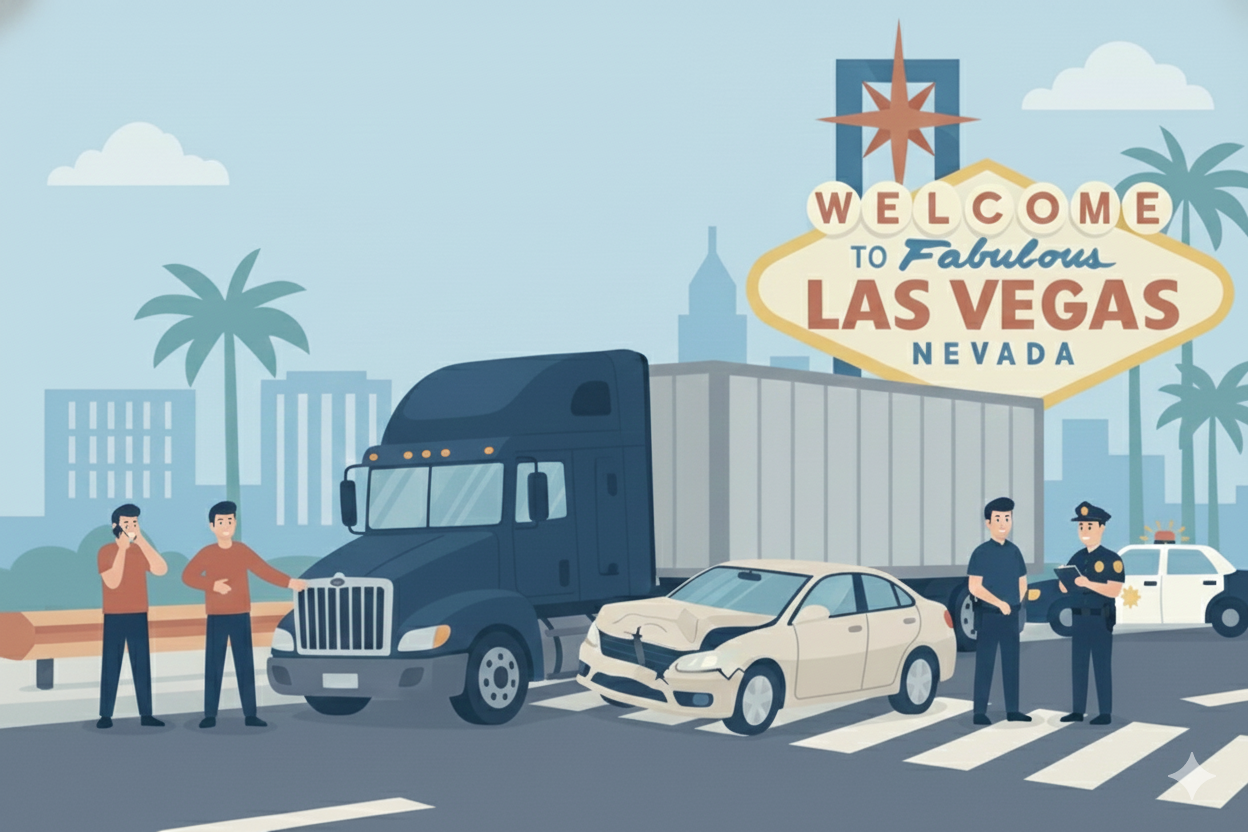
Picture the difference between a 4,000-pound sedan and an 80,000-pound fully loaded commercial truck. When these two vehicles collide, the laws of physics are brutally one-sided—and the legal process that follows is equally complex.
Here in Las Vegas and across Nevada, fault matters. Nevada is a fault state, meaning the person (or entity) responsible for causing a crash is the one who must pay for the damages. But when a truck is involved, determining who is truly “at fault” becomes significantly more complicated than in a standard car accident.
While all crashes in Nevada follow the same basic rules of negligence, commercial truck accidents differ dramatically from car accidents in five major ways—each of which affects liability, evidence, and how much compensation a victim can receive.
Below are the five key differences every Las Vegas victim should know.
Key Difference #1: Multiple Liable Parties — Not Just the Driver
Car Accident Liability: Usually Simple
Most car accidents involve:
- One negligent driver
- One insurance company
- One accident report
Liability is generally limited to the drivers involved.
Truck Accident Liability: A Web of Responsible Parties
Accident trucking cases often involve multiple defendants, each potentially liable for contributing to the crash. This includes:
1. The Truck Driver
For:
- Fatigue
- Speeding
- Distracted driving
- Impaired driving
- Violating traffic laws
2. The Trucking Company / Motor Carrier
For:
- Negligent hiring or training
- Pressuring drivers to exceed Hours-of-Service limits
- Poor vehicle maintenance
- Failing to follow federal safety regulations
3. The Cargo Loader or Shipper
For:
- Overloaded or improperly balanced cargo
- Cargo shifts are causing loss of control
- Hazardous material violations
4. The Manufacturer or Mechanic
For:
- Mechanical failures
- Defective brakes, tires, or steering components
What This Means for Victims
More parties mean:
- More potential sources of compensation, but
- More defense teams are fighting your claim
A truck accident case is far more complex than a typical car crash claim.
Key Difference #2: Federal & State Regulatory Oversight
Car Accident Rules
Car drivers must follow Nevada state traffic laws—things like speed limits, DUI rules, and distracted driving laws.
Truck Accident Rules (A Much Higher Standard)
Commercial trucks must comply with Nevada regulations and the strict federal rules of the Federal Motor Carrier Safety Administration (FMCSA).
Major FMCSA regulations include:
Hours of Service (HOS)
Truck drivers may drive:
- A maximum of 11 hours within a 14-hour window
- Mandatory breaks and rest periods
These rules fight driver fatigue, a major cause of truck accidents.
Maintenance & Inspections
Drivers and carriers must conduct:
- Pre-trip inspections
- Post-trip inspections
- Regular repairs and tire/brake checks
Stricter DUI Standards
- Commercial drivers: 0.04% BAC limit
- Regular drivers: 0.08% BAC
Liability Impact
A violation of FMCSA rules often creates negligence per se, meaning the trucking company is automatically considered negligent for breaking safety laws.
Key Difference #3: Specialized Evidence & Corporate Records
Car Accident Evidence
Typical evidence includes:
- Police report
- Photos
- Witness statements
- Medical records
While useful, this evidence is often limited.
Truck Accident Evidence (Highly Detailed)
Truck accidents involve critical corporate data that must be preserved immediately:
Electronic Logging Devices (ELDs)
Record:
- Driving hours
- Speed
- Sudden braking
- Driver fatigue indicators
Black Box (ECM) Data
Tracks events seconds before impact.
Maintenance & Inspection Logs
Confirm whether the truck was properly cared for.
Driver Qualification Files
Include:
- Training records
- Driving history
- Prior safety violations
Drug & Alcohol Testing Records
Commercial drivers must be tested after serious crashes.
Why This Matters
This level of evidence can make or break a truck accident case, but it must be secured quickly through a spoliation letter—a legal demand to preserve evidence. Without it, companies may destroy or overwrite critical data.
Contact specialized legal representation today! Free Case Evaluation
Key Difference #4: Catastrophic Damages & Severe Injuries
Car Accident Injuries
Often involves:
- Whiplash
- Soft tissue injuries
- Minor fractures
- Moderate property damage
Accident Trucking Injuries
Because of the extreme weight difference, truck accidents commonly cause catastrophic injuries, including:
- Traumatic Brain Injury (TBI)
- Spinal cord injuries
- Paralysis
- Amputation
- Severe burns
- Wrongful death
These injuries often require:
- Lifelong medical care
- Multiple surgeries
- Long-term rehabilitation
- Major loss of earning capacity
Compensation Stakes
Because injuries are severe, settlements and jury verdicts are much higher. This also means trucking companies aggressively defend these claims.
Key Difference #5: Insurance Coverage & Defense Strategy
Car Accident Insurance
Nevada’s minimum auto insurance limits:
- $25,000 per person
- $50,000 per accident
These limits often cap what victims can recover in a car accident.
Truck Accident Insurance (High Limits Required)
Federal law requires commercial trucks to carry much higher insurance, including:
- $750,000 minimum for general freight
- Up to $5 million for hazardous materials
Impact on the Case
More insurance means:
- Larger potential settlements
- But stronger, faster, and more aggressive defense tactics
- Rapid-response teams sent to the crash scene
- Attempts to blame the victim or minimize damages
Trucking companies fight hard because millions of dollars may be at stake.
The Bigger Picture
Commercial truck accidents are not just “bigger car accidents.” Their corporate structure, federal regulation, specialized evidence, catastrophic nature, and high-stakes insurance transform them into extremely complex legal cases.
Five Differences at a Glance
- Multiple liable parties beyond the driver
- FMCSA federal regulations apply to truck drivers and companies
- Specialized evidence requiring immediate preservation
- Catastrophic injuries and high medical costs
- Massive insurance policies lead to fierce defense strategies
Because trucking companies and insurers have enormous resources, victims should never handle these claims alone.
If you or a loved one has been injured in a truck accident in Las Vegas, speak with an experienced truck accident attorney who understands the FMCSA regulations and can protect your rights.
FAQ
1. What should I do immediately after a truck accident?
- Call 911
- Get medical attention
- Take photos of vehicles, road conditions, and injuries
- Get contact information from witnesses
- Do not talk to trucking company insurers
- Contact a car accident lawyer to preserve evidence
2. Who is responsible in a truck accident—the driver or the trucking company?
It may be both. Liability can extend to:
- The truck driver
- The trucking company
- The cargo loader
- The manufacturer
- Maintenance contractors
A lawyer investigates all parties to maximize compensation.
3. Do truck accidents pay more than car accidents?
Often, yes. Truck accidents typically involve:
- More severe injuries
- Larger insurance policies
- Corporate defendants
This leads to higher settlement values.
4. How long do I have to file a truck accident claim in Nevada?
Nevada’s Statute of Limitations for personal injury claims is generally two years.
However, evidence in truck cases disappears quickly—so victims should contact an attorney immediately.
5. Why are truck drivers held to different standards?
Truck drivers operate massive commercial vehicles and must follow strict FMCSA federal safety regulations, including hours-of-service limits, lower DUI thresholds, and mandatory inspections.