
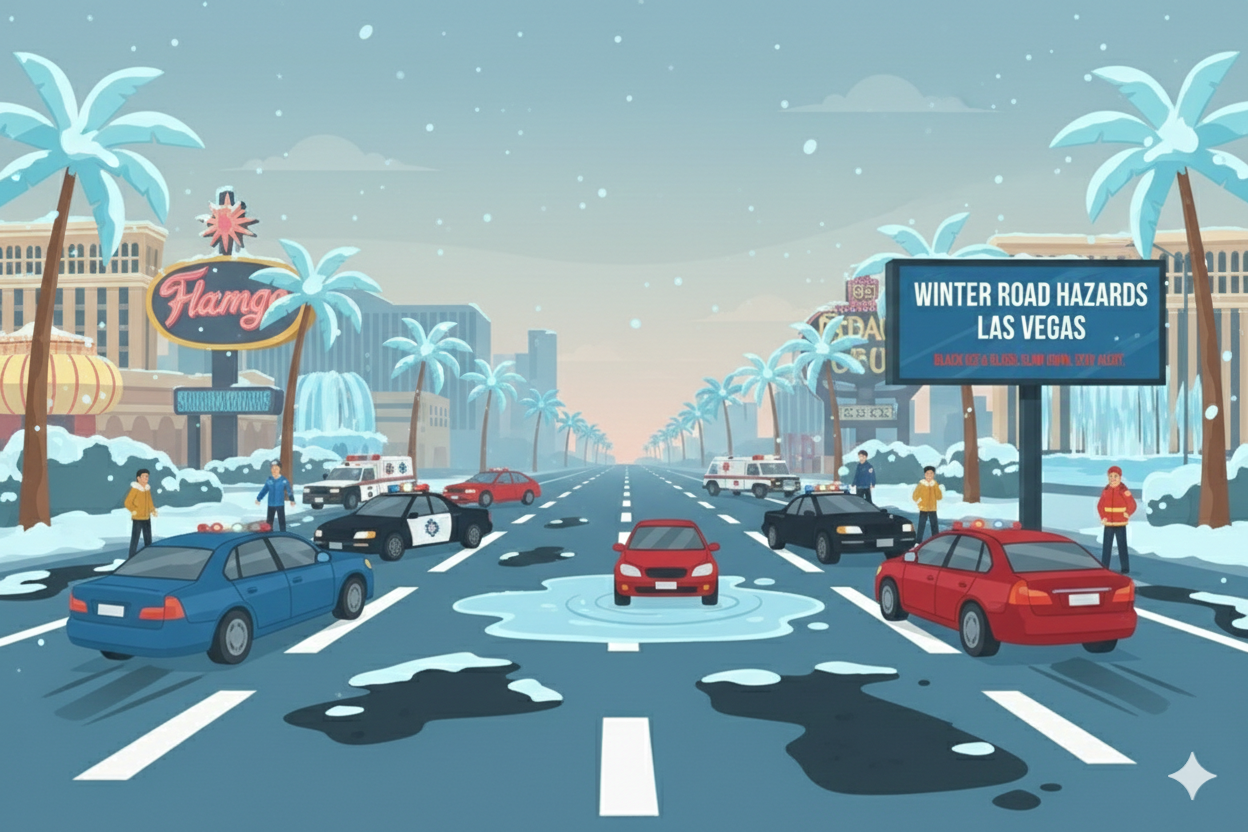
Even though Las Vegas is famous for sunshine, dry heat, and year-round driving comfort, winter road conditions here can be surprisingly dangerous. Many local drivers underestimate seasonal road hazards because snowstorms and freezing temperatures are not part of everyday life in Southern Nevada. But when rain falls, temperatures dip overnight, or visibility drops, the risk of serious accidents rises sharply.
Winter driving dangers in Las Vegas aren’t about blizzards—they’re about unfamiliar conditions, slick road surfaces, road hazards, and drivers who fail to adjust their behavior. Rain, oil buildup, sudden weather changes, and reduced daylight combine to create hazardous situations that many drivers simply aren’t prepared for.
Recent Nevada crash trends confirm that winter is far from a “safe driving season.” From January through March and again during late-year holiday months, accident rates, injuries, and fatalities consistently spike. With Clark County leading the state in total crashes, Las Vegas drivers need to understand how winter road hazards affect safety—and what steps to take if an accident happens.
If you’ve been injured and are searching for an experienced Las Vegas car accident attorney, this guide explains winter driving risks, liability issues, road hazards, and how to protect your rights after a weather-related crash.
Why “Mild” Winters in Las Vegas Can Still Be Dangerous
Unlike colder climates, Las Vegas drivers rarely encounter winter conditions. That lack of familiarity is exactly what makes winter driving here risky.
Rain-Slicked Roads and Oil Buildup
Desert roadways accumulate oil, dust, rubber, and debris throughout the year. When rain finally arrives, especially after long dry periods, it mixes with this buildup and creates extremely slick surfaces—often more dangerous than snow-covered roads elsewhere.
Intersections, freeway on-ramps, and high-traffic corridors are especially hazardous during the first rainfall of the season.
Icy Patches at Higher Elevations
While the Las Vegas Valley may stay above freezing, nearby areas often do not. Drivers traveling to:
- Red Rock Canyon
- Mount Charleston
- Elevated highways and mountain passes
May encounter overnight ice, shaded roadways, or freezing temperatures that create black ice—often without warning.
Reduced Visibility and Shorter Days
Winter brings:
- Earlier sunsets
- Increased glare from low-angle sunlight
- Fog in valley areas
- Heavy nighttime rain
All of these conditions reduce reaction time and increase the likelihood of rear-end and intersection collisions.
Sudden Weather Changes
A commute that begins under clear skies can quickly turn hazardous when rain moves in. Many accidents occur because drivers fail to slow down or adjust following distances when conditions change rapidly.
Winter Crash Trends in Nevada and Las Vegas
Winter accident risks in Las Vegas are supported by statewide data.
Nevada Crash Statistics
Nevada traffic safety reports consistently show:
- Increased collisions during the winter months
- Higher injury rates during rainy periods
- Elevated fatal crashes during holiday travel seasons
In 2024, Nevada recorded 419 traffic deaths, representing a year-over-year increase of more than 3%. Clark County accounted for the largest share of these crashes.
Why Winter Accidents Are More Severe
Winter crashes tend to be more dangerous because:
- Vehicles require longer stopping distances on wet pavement
- Drivers are less accustomed to adjusting speed
- Multi-vehicle chain-reaction crashes are more common
Rain-related crashes remain one of the leading contributors to winter accidents statewide.
Common Winter Driving Mistakes in Las Vegas
Many winter accidents are preventable. Unfortunately, drivers often make the same mistakes year after year.
Driving Too Fast for Conditions
Posted speed limits are designed for ideal conditions—not wet roads. Speeding during rain is one of the most common causes of winter crashes in Nevada.
Following Too Closely
Wet pavement increases stopping distance dramatically. Tailgating leaves no margin for error when traffic suddenly slows.
Overconfidence in Familiar Roads
Drivers often assume familiar routes are safe, even when conditions change. Intersections and curves behave very differently when slick.
Poor Vehicle Maintenance
Worn tires, bad brakes, and failing windshield wipers all contribute to winter crashes.
Winter Driving Safety Tips for Las Vegas Roads
To reduce accident risk during winter, drivers should:
- Slow down on wet or shaded roads
- Increase the following distance
- Check tires, brakes, and windshield wipers
- Use headlights in rain or low-visibility conditions
- Be cautious on bridges and elevated roadways
- Stay alert when driving outside the valley
These precautions help—but even cautious drivers can be injured by others who fail to adjust.
Liability in Weather-Related Crashes in Nevada
One of the biggest misconceptions after a winter crash is that the weather automatically excuses fault. That is not true under Nevada law.
Drivers Are Still Responsible
Nevada law requires drivers to adjust their behavior to road hazards and weather conditions. A driver may still be liable if they were:
- Speeding in wet or icy conditions
- Following too closely
- Distracted or impaired
- Driving aggressively despite limited visibility
Weather may explain why a crash occurred, but it does not eliminate responsibility when unsafe driving played a role.
Can Cities or Government Agencies Be Liable?
In some cases, liability extends beyond individual drivers.
When Government Liability May Apply
Cities, counties, or state agencies may be responsible when:
- Roads are poorly designed or inadequately drained
- Dangerous conditions are not addressed within a reasonable time
- Warning signs are missing, damaged, or obscured
- Known road hazards are ignored
Claims involving government entities are complex and subject to strict notice deadlines, sometimes as short as six months.
Comparative Negligence in Nevada Winter Accidents
Nevada follows a modified comparative negligence rule.
You may still recover compensation if:
- You were less than 51% at fault
However, your compensation will be reduced by your percentage of fault. For example, if you are found 20% responsible, your recovery is reduced by 20%.
This makes strong evidence critical in winter accident cases.
Evidence That Strengthens Winter Crash Claims
Successful winter accident claims often rely on detailed evidence, including:
- Photos or videos of the road, any road hazards, and weather conditions
- Dashcam or traffic camera footage
- Witness statements
- Official weather reports
- Police accident reports
- Vehicle damage documentation
Because road conditions change quickly, preserving evidence as soon as possible is essential.
How to File a Claim After a Winter Accident in Las Vegas
If you’re injured in a winter crash, early action protects both your health and your legal rights.
Step 1: Get Medical Attention Immediately
Even if injuries seem minor, seek medical care right away. Conditions like whiplash, concussions, and internal injuries may not show symptoms immediately.
Step 2: Document the Scene
If it’s safe to do so, take photos of:
- Road, any road hazards, and weather conditions
- Vehicle positions and damage
- Skid marks, standing water, or ice
- Traffic signs and signals
Step 3: File a Police Report
A police report helps document:
- Weather conditions
- Road hazards
- Driver statements
- Preliminary fault assessments
Step 4: Be Careful With Insurance Companies
Insurance adjusters often:
- Blame the weather to deny liability
- Minimize injuries
- Push quick, low settlement offers
Avoid giving recorded statements without legal guidance.
Step 5: Understand Recoverable Damages
Depending on your case, compensation may include:
- Medical bills and future treatment
- Lost wages and reduced earning capacity
- Pain and suffering
- Vehicle repair or replacement
Step 6: Work With an Experienced Attorney
A knowledgeable Las Vegas car accident attorney can:
- Investigate crash causes
- Preserve evidence
- Handle insurance negotiations
- Identify third-party or government liability
- Maximize your financial recovery
Stay Safe—and Know Your Rights This Winter
Winter driving in Las Vegas presents real road hazard dangers—even without snowstorms. Rain-slick roads, limited visibility, unfamiliar conditions, and driver inexperience contribute to serious accidents every year.
Understanding these risks—and knowing what to do after a crash—can protect both your health and your financial future.
If you or a loved one has been injured in a winter-related accident, don’t leave your recovery to chance.
The team at Paul Powell Law Firm investigates accidents, preserves evidence, and fights insurance companies—so you can focus on healing and moving forward.
Frequently Asked Questions About Winter Accidents in Las Vegas
Can cities be liable for poor road conditions and road hazards?
Yes. Government agencies may be responsible if they failed to reasonably maintain roads or warn drivers of known road hazards. These cases have strict filing deadlines.
What insurance applies in weather-related crashes?
Typically, the at-fault driver’s liability insurance applies. If multiple parties contributed, more than one policy may be involved.
What if the other driver blames the weather?
Weather alone does not excuse negligence. Drivers must adjust speed and behavior to conditions.
What if I was partially at fault?
You may still recover damages under Nevada’s comparative negligence law if you were less than 51% responsible.
How long do I have to file a claim?
Deadlines vary depending on the parties involved. Government claims often require immediate action.