
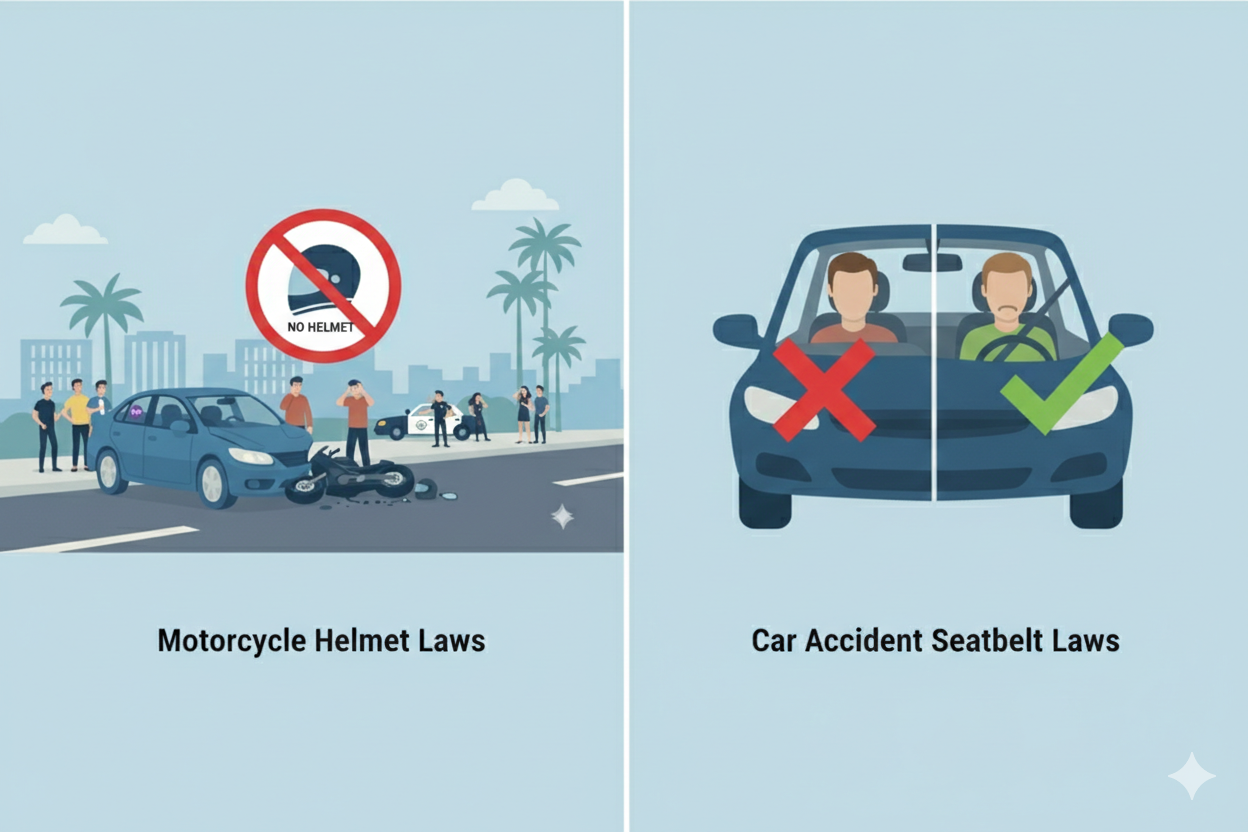
Road safety laws exist for one primary reason: to reduce serious injuries and save lives. Two of the most well-known safety regulations are motorcycle helmet laws and car seatbelt laws. While they apply to different types of vehicles, both play a major role in determining injury severity—and even legal outcomes—after an accident.
For riders and drivers in Las Vegas, understanding how these laws work is essential. Ignoring them can lead not only to devastating injuries but also to complications with insurance claims and your ability to recover compensation after a motorcycle accident or car crash.
Below are five things you should know about how motorcycle helmet laws and car seatbelt laws compare—and why they matter if you’re injured.
Why Safety Laws Matter on the Road
Motorcycle helmet and seatbelt laws are designed to reduce the severity of injuries when accidents happen. While they don’t prevent crashes entirely, they significantly limit the damage to the human body during impact.
From a legal standpoint, these laws also influence:
- How fault is evaluated
- How insurance companies assess claims
- Whether compensation may be reduced
When safety rules are ignored, insurers often try to shift blame onto the injured person. That’s why understanding these regulations—and speaking with a motorcycle accident attorney Las Vegas riders trust—can protect both your health and your legal rights.
1. Helmet Laws and Seatbelt Laws Serve the Same Core Purpose
At their core, helmet and seatbelt laws exist to reduce catastrophic injuries.
Motorcycle Helmets
Helmets are designed to absorb impact and protect the skull and brain. They reduce the risk of traumatic brain injuries, which are among the most serious and life-altering outcomes of motorcycle crashes.
Car Seatbelts
Seatbelts prevent occupants from being ejected and reduce the force of impact on vital organs. They also help drivers maintain control during collisions.
Although the mechanics differ, both safety devices dramatically improve survival chances and long-term recovery outcomes.
2. Motorcycle Helmet Laws Are Often More Complex Than Seatbelt Laws
Helmet laws vary widely across the country, which makes them more confusing than seatbelt laws.
Helmet Laws
Some states require all riders to wear helmets, while others apply helmet requirements based on:
- Age
- Experience
- Insurance coverage
These variations can easily confuse riders—especially those traveling across state lines.
Seatbelt Laws
Seatbelt laws are generally more consistent. Most states require seatbelt use for all drivers and passengers, and enforcement is more uniform.
Because of these differences, insurance companies may scrutinize motorcycle accidents more aggressively—especially when motorcycle helmet use is questioned.
3. Violating Either Law Can Affect Injury Claims and Compensation
Failing to wear a motorcycle helmet or seatbelt does not automatically eliminate your right to compensation—but it can complicate your claim.
Comparative Negligence
Nevada follows a comparative negligence system. Insurance companies often argue that injuries were made worse because safety equipment wasn’t used, attempting to reduce the value of a motorcycle accident settlement.
Common Insurance Arguments
- “You caused your own injuries.”
- “Your damages would have been less severe.”
- “You assumed the risk.”
An experienced motorcycle accident lawyer knows how to challenge these arguments and refocus the case on the other party’s negligence.
4. Enforcement and Penalties Differ Between Helmets and Seatbelts
Seatbelt Enforcement
Seatbelt violations often result in citations or fines. In many cases, enforcement may be secondary, meaning drivers aren’t pulled over solely for seatbelt violations.
Helmet Enforcement
Motorcycle helmet violations can result in fines and immediate traffic stops, depending on the jurisdiction. These citations can later be used by insurers to question liability or reduce damages.
Long-Term Consequences
Beyond tickets, violations may impact:
- Insurance premiums
- Claim valuations
- Negotiation leverage
Legal guidance helps minimize the impact of these penalties on your injury case.
5. Safety Laws Do Not Eliminate Your Right to Compensation
This is one of the most misunderstood aspects of accident law.
Even if you weren’t wearing a helmet or seatbelt:
- You may still recover damages
- The other driver’s negligence remains central
- Liability does not automatically shift to you
Attorneys counter “you caused your injuries” defenses by focusing on:
- Speeding
- Impaired driving
- Failure to yield
- Reckless or distracted driving
If your accident involved intoxication, visit our DUI Victims page for more information.
Understanding Safety Laws Protects Both Health and Legal Rights
Motorcycle helmet laws and car seatbelt laws share the same mission—reducing serious injuries—but they differ in complexity, enforcement, and legal impact.
Compliance improves safety and strengthens injury claims, but noncompliance does not erase your rights. After a motorcycle accident or car crash, proper legal guidance ensures insurers don’t unfairly minimize your claim.
If you or a loved one has been injured, speaking with a motorcycle accident attorney Las Vegas residents rely on can help protect your future.
Start by visiting our Homepage or request a Free Case Evaluation today.
Frequently Asked Questions (FAQs)
No. Fault is based on who caused the accident, not solely on safety compliance.
No. Helmet laws vary significantly by state, unlike seatbelt laws, which are more consistent.